
Summer settings that keep the house dry as well as cool
The Department of Energy suggests about 78 degrees when you are home in summer as an energy-saving set point. In a Birmingham July, many people find 78 comfortable only when the humidity is under control. A house at 78 degrees and 45 percent humidity feels fine. The same house at 65 percent humidity feels sticky.
Start at 78 and lower it a degree at a time until you are comfortable. Every degree lower costs more to hold, and the difference shows on an August Alabama Power bill. Raising the setting a few degrees while you are at work is reasonable, but avoid letting the house climb into the mid 80s on humid days. The system then has to pull out stored moisture along with the heat, and it may not catch up by evening.
If you have to run the thermostat in the low 70s to feel comfortable, something else is usually wrong. High humidity, an oversized system or leaky ducts make a house feel warmer than the number on the screen.
Fan auto or on: why it matters in a humid climate
Most thermostats offer a fan setting of auto or on. On auto, the blower runs only when the system is heating or cooling. On means it runs all the time. In dry climates a constant fan can even out temperatures, but in Birmingham it usually works against you in summer.
Here's why. During a cooling cycle, water condenses on the indoor coil and drips into the drain pan. When the compressor stops and the blower keeps running, air blows across that wet coil and carries much of the moisture back into the house. Over a day, that adds up to a noticeably damper home.
- Summer: keep the fan on auto unless you have a specific reason to change it.
- Spring pollen season: a short circulate setting can help a good filter catch more pollen, but watch indoor humidity.
- Winter: auto is still the default, though a constant fan can even out temperatures in a two-story home.
- Variable-speed systems: some have a low-speed circulate mode built for this, which beats plain on.
The EPA suggests keeping indoor humidity between 30 and 50 percent, and under 60 percent at the most. A small humidity meter is inexpensive, and it tells you more about summer comfort than the thermostat does.
Winter settings for gas furnaces and heat pumps
For winter, the DOE suggests about 68 degrees while you are awake, with a lower setting while you sleep or are away. That advice works well for a gas furnace, which heats quickly and recovers from a setback at about the same cost per hour whenever it runs.
Heat pumps are different. A heat pump moves heat efficiently, but slowly. When you raise the setting several degrees at once, many thermostats bring on the backup electric heat strips to close the gap fast. Those strips cost far more to run than the heat pump itself, so a deep overnight setback followed by a big morning jump can erase the savings.
Setbacks that work with a heat pump
- Keep setbacks small, two or three degrees, or skip them on the coldest nights.
- Use a thermostat with smart or adaptive recovery that warms the house gradually.
- Notice whether the screen shows aux heat often on mild mornings. If it does, the settings may need adjusting.
- Save emergency heat for a real heat pump failure, since it runs the heat strips alone and costs the most.
Dual fuel systems add another layer. A balance point setting tells the thermostat at what outdoor temperature to switch from the heat pump to the gas furnace. If that setting is wrong, you either burn gas on mild days or lean on a struggling heat pump during a cold snap. Our guide on choosing a heat pump or gas furnace explains how the two work together.
Smart thermostat features worth turning on
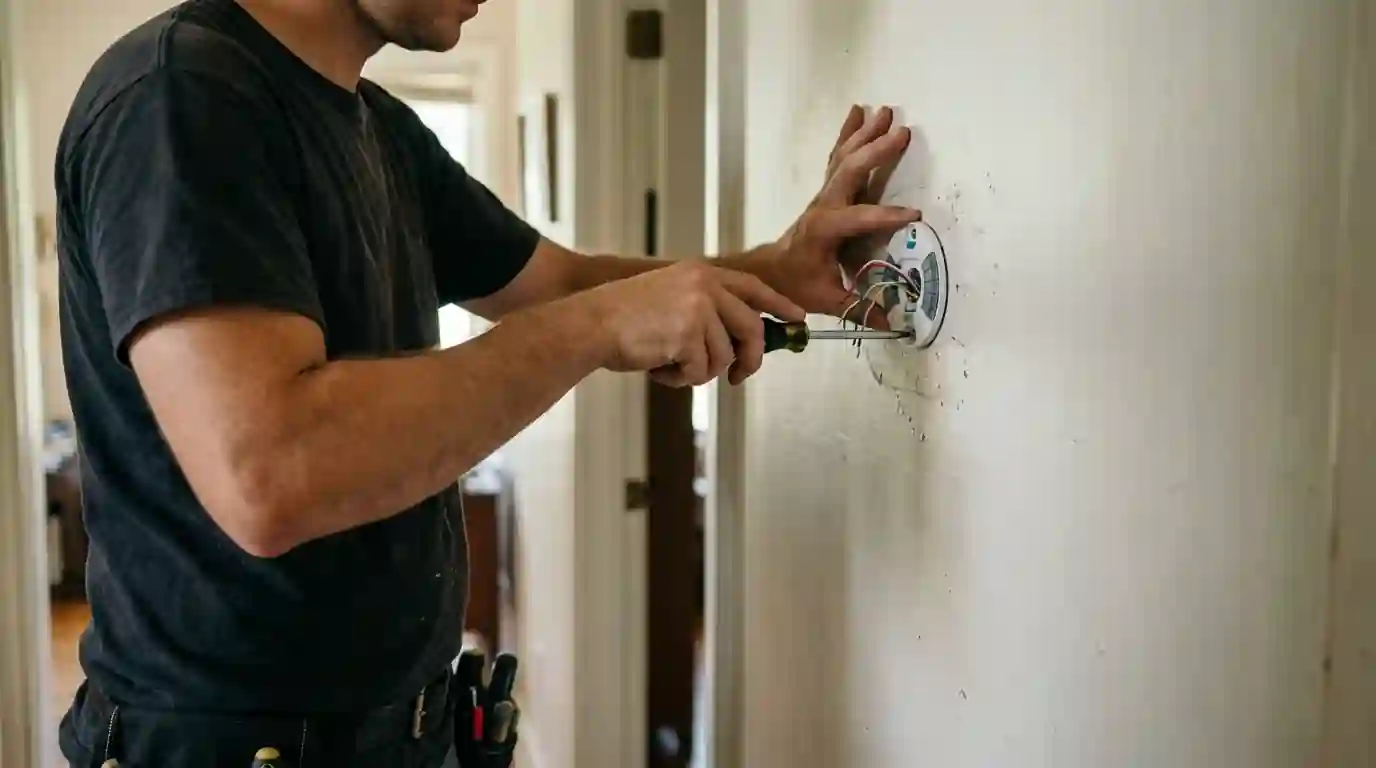
A smart thermostat only saves money if its features match your equipment. On a smart thermostat installation, the setup matters as much as the wiring. A thermostat configured for the wrong system type can short cycle a furnace or run heat strips when it shouldn't.
- Schedules or geofencing: raise or lower the setting when the house is empty, based on the clock or your phone location.
- Humidity control: some models slow the blower or run slightly longer to pull extra moisture in summer.
- Adaptive recovery: starts early so the house reaches the set point on time without big jumps.
- Aux heat lockout: on heat pumps, keeps the strips off above an outdoor temperature you choose.
- Filter reminders: useful during pollen season, when filters load up fast.
- Cycle rate settings: keep the system from turning on and off too often.
Location matters too. A thermostat in direct afternoon sun, next to a kitchen or on an exterior wall reads wrong and runs the system on bad information. If yours sits in one of those spots, moving it can fix comfort complaints that look like equipment problems.
Vacation settings and freeze protection
In summer, don't shut the system off while you travel. A closed Birmingham house in July can reach the 90s inside and soak up humidity that takes days to remove. A setting around 82 to 85 degrees holds the moisture down at a fraction of the normal cost. In homes that tend to run damp, stay closer to 82.
In winter, keep the heat on whenever a freeze is possible. Set it no lower than 55 to 58 degrees, and open the cabinet doors under sinks on outside walls during a hard freeze. A cold snap into the teens can freeze pipes in a crawlspace or an exterior wall overnight.
Before you leave, replace the filter, check that the thermostat batteries are fresh if it uses them, and clear leaves away from the outdoor unit. If the system has been acting up, call before the trip rather than after it.
Quick checks when the thermostat seems wrong
Many thermostat complaints have simple causes. Before you call, run through these safe checks.
- Confirm the mode is set to cool or heat, not off or fan only.
- Replace the batteries if the screen is dim or blank.
- Make sure a schedule or vacation hold is not overriding your setting.
- Check the filter, since a clogged one can keep the system running without reaching the set point.
If the thermostat is set correctly and the system still won't respond, the problem may be wiring, the control board or the equipment itself. A person answers our line 24/7 and can help you sort out which it is.
Key takeaways
- Start at 78 degrees in summer and 68 in winter, then adjust a degree at a time.
- Keep the fan on auto in summer so coil moisture drains away instead of returning to the air.
- Use small setbacks or adaptive recovery with a heat pump to avoid costly aux heat.
- Never shut the heat off on a winter trip, and keep the house at 55 to 58 degrees or warmer.
Questions readers ask
Around 82 to 85 degrees, and closer to 82 if your house tends to feel damp. Leave the fan on auto. Turning the system off completely lets heat and humidity build up, and the house can take a day or more to feel comfortable again after you return.
Usually the setting jumped several degrees at once after an overnight setback, so the thermostat called for the backup heat strips to recover faster. Smaller setbacks, adaptive recovery or an aux heat lockout setting fix most cases. If aux heat runs constantly, the heat pump itself may need service.
In a humid climate like ours, yes. When the compressor stops, the blower pushes air over the wet indoor coil and returns much of that moisture to the house. Keeping the fan on auto lets the water drain away between cycles, so the house stays drier at the same temperature.
Keep it at 55 to 58 degrees or higher. Pipes in crawlspaces and outside walls are the first to freeze when a cold snap drops into the teens. Open sink cabinets on exterior walls, and have someone check the house if a long, hard freeze is forecast.
Services mentioned in this guide
- Smart Thermostat InstallationThermostats wired, configured and matched to heat pumps, dual fuel and multi-stage systems.
- Heat Pump Tune-UpTwice-yearly service that covers both the cooling and the heating side.
- Whole-House DehumidifierDucted dehumidifiers that pull sticky Birmingham humidity out of the whole house.