Furnace repair in Birmingham, AL
The thermostat calls for heat and you hear clicks, a hum or nothing at all. We trace the ignition sequence step by step, find the part that stopped it and check for carbon monoxide before we leave.
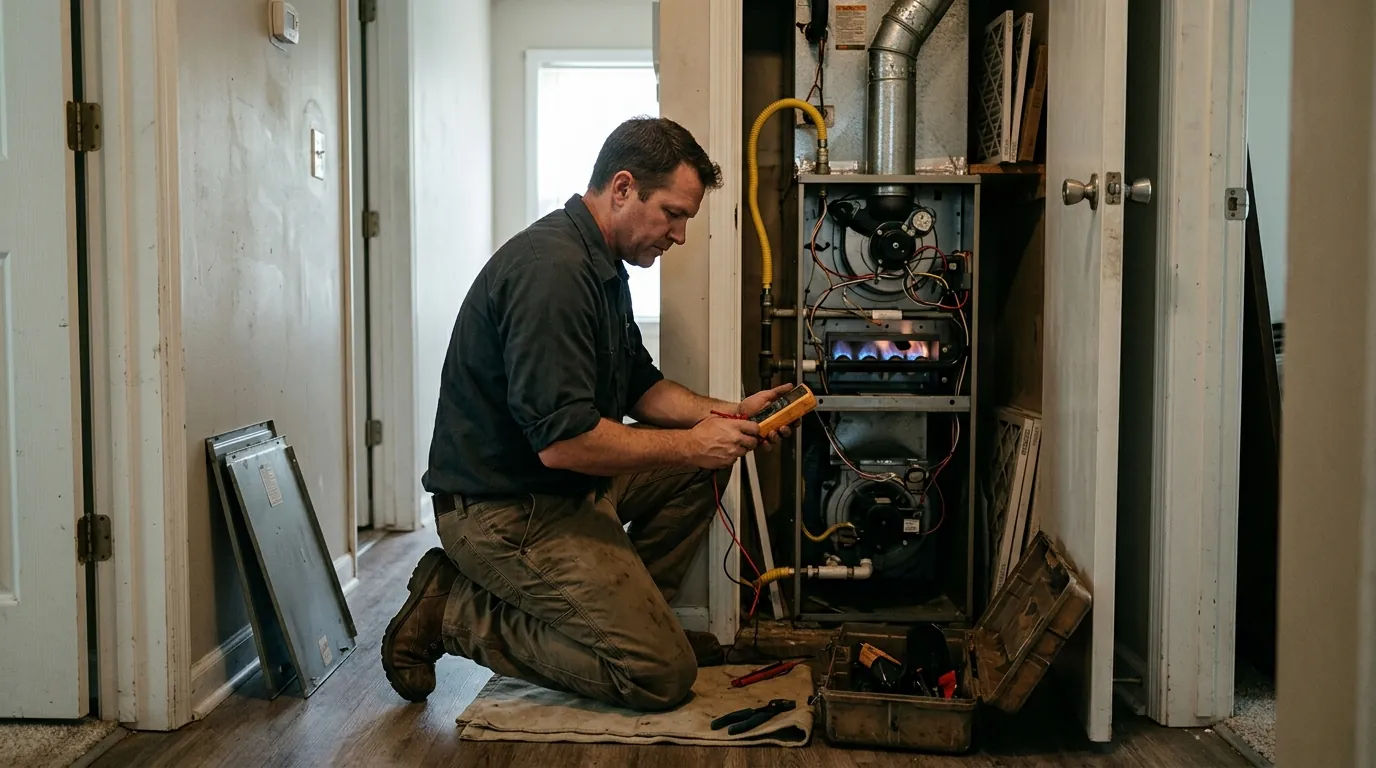
Most gas furnace failures in Birmingham come from a worn hot surface igniter, a dirty flame sensor, a blocked pressure switch hose or a limit switch tripping on a clogged filter. Zeltman Heating & Air reads the furnace's blink code, tests each step of the ignition sequence and checks combustion and venting. You get the cause and the price before work starts.
Signs your furnace needs repair
Clicking with no flame
You hear the inducer and repeated clicks, but the burners never light. Usually an igniter, a pressure switch or a gas supply issue.
Flame lights, then quits
The burners catch for a few seconds and shut off. A dirty flame sensor or a poor ground is the most common cause.
Blower runs and won't stop
A fan that runs constantly can be a thermostat set to on, a stuck relay on the board or a limit switch that has tripped.
Short heating cycles
Heat that starts and stops every few minutes often means overheating from a dirty filter, closed vents or a weak blower.
A blinking light on the board
Most furnaces show a blink code through a small window in the door. Counting the flashes tells us where to start.
Water around a high-efficiency furnace
Condensing furnaces make water. A clogged trap or drain line can stop the furnace and leave a puddle by the cabinet.
How a gas furnace starts, and where it usually stops
A gas furnace lights in a set order. The inducer fan starts and a pressure switch proves the flue is drafting. Next the igniter glows, the gas valve opens and the flame sensor confirms the burners lit. If any step fails, the control board stops and blinks a code, and that sequence is how we find the fault.
Birmingham winters are mild most days, so a furnace can sit idle for weeks and then run hard during a cold snap into the 20s. That pattern is tough on igniters, which crack with age, and on flame sensors, which collect a coating over the off season. Both are common, inexpensive repairs.
Other faults point to airflow. A clogged filter or a dirty blower wheel lets the heat exchanger overheat, and the limit switch shuts the burners down to protect it. Resetting it without fixing the airflow just repeats the cycle. A flame rollout switch that trips is more serious and calls for a closer look at the heat exchanger and flue.
Safety is part of every furnace repair. Cracked heat exchangers and blocked flues can leak carbon monoxide, so we test combustion and check the venting before we restart the system. If we see signs of a crack, we'll recommend a full heat exchanger and CO check. Homes with gas appliances should keep working CO alarms near bedrooms.
How a furnace repair visit goes
Tell us what it's doing
Clicking, a blinking light or silence all help. A gas odor is different: get outside first and phone Spire or 911, then us.
Read the sequence
The technician runs a heat call and watches each step, from inducer to flame, to see exactly where it stops.
Cause and price up front
We show you the failed part or reading and give you the repair price before any work begins.
Repair and safety checks
Igniters, flame sensors, pressure switches and limit switches are often replaced on the first visit. Boards and inducer motors may need to be ordered.
Confirm steady heat
We run several full cycles, measure the temperature rise across the furnace and check CO and draft once more.
What we test on a furnace repair call
- Thermostat call for heat and 24 volt power at the control board
- Blink code history from the board's diagnostic light
- Inducer motor operation and the pressure switch hose for blockage or water
- Hot surface igniter resistance and any visible cracks
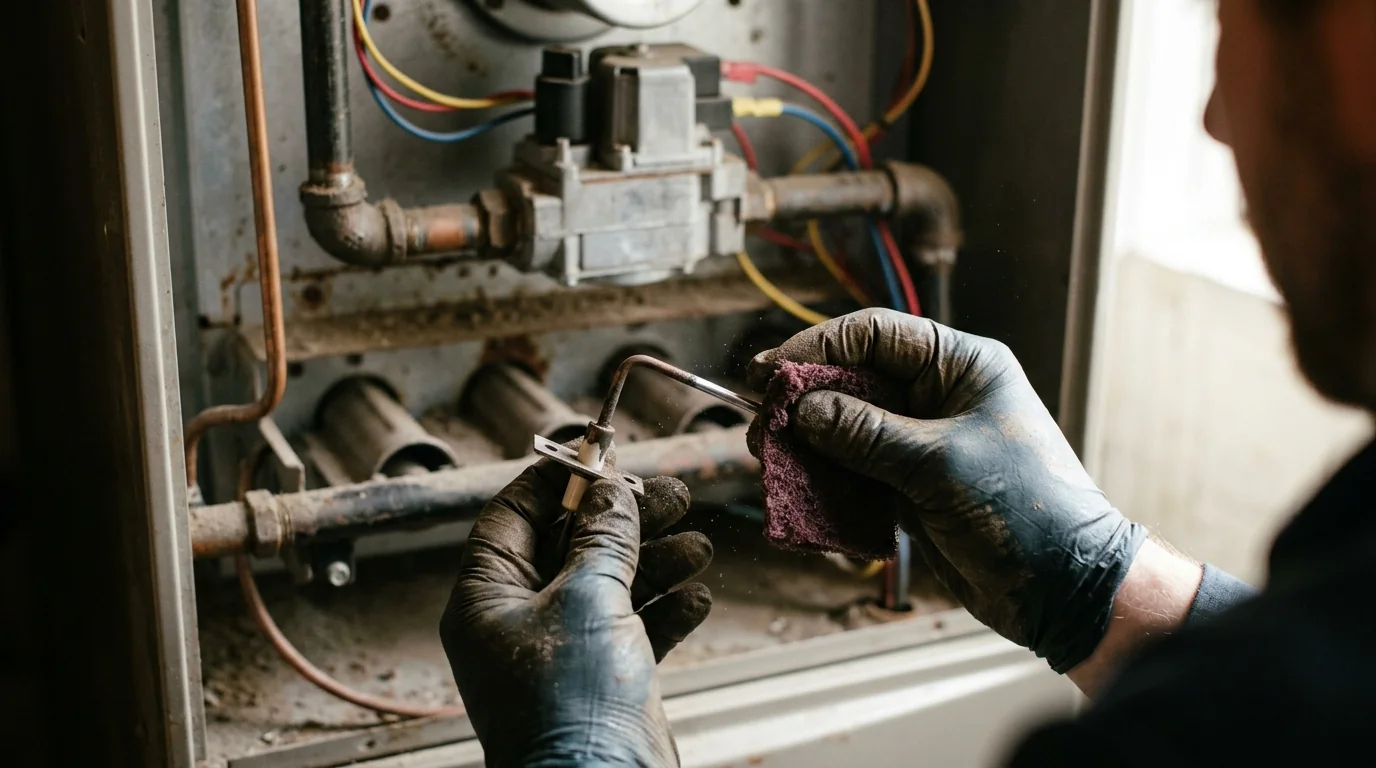
- Flame sensor microamp signal before and after cleaning
- High limit and rollout switches, and why either one tripped
- Gas pressure at the valve, plus burner flame shape and color
- Flue draft and a carbon monoxide reading before the system goes back in service
What furnace repair costs in Birmingham
$145 to $780
Cleaning a flame sensor or clearing a pressure switch hose sits near the low end. An igniter, limit switch or condensate trap repair lands in the middle. An inducer motor or control board sits near the top. Heat exchanger and gas valve replacements are priced separately. We show you the price before a single part is changed.
Ask for a price (659) 777-4129What moves the number
- The failed part
- Cleaning a flame sensor takes minutes, while an inducer motor is a pricier part and a longer job.
- Furnace type
- Condensing furnaces have drains, traps and extra sensors that standard 80% furnaces don't.
- Location of the furnace
- A closet furnace is quick to work on. A horizontal unit in a cramped attic takes longer.
- Parts availability
- Common Carrier, Rheem and Goodman parts are easy to find. Some boards and inducers for older models take a day or two.
- When you call
- Night, weekend and holiday visits cost more than a weekday appointment.
Furnace repair in Birmingham closets, crawlspaces and attics
In Forest Park, many historic homes still vent their furnaces through old chimneys, and those flues need a careful look on every repair. A retrofit liner or a partly blocked chimney changes how the furnace drafts. In 1950s and 1960s ranches in Crestwood and Roebuck, a hallway closet furnace feeding crawlspace or attic ducts is a common setup.
Two-story homes in Hoover and Trussville often have a horizontal furnace in the attic serving the upstairs. Those units are harder to reach, and their condensate lines can clog or freeze in a cold snap. Gas service in Birmingham comes from Spire, and if anything smells like gas, their emergency line or 911 comes before any repair call.
Areas we cover most often
We repair and replace equipment from these manufacturers, plus most other makes.
Questions about furnace repair in Birmingham
Repeated clicking with no flame usually means the igniter isn't glowing, the pressure switch isn't closing or gas isn't reaching the burners. We test each step in order. If the gas is off at the meter, Spire may need to restore service first.
Most often the flame sensor is coated and can't confirm the flame, so the board shuts the gas off for safety. A cleaning usually fixes it. A loose ground wire or low gas pressure can cause the same pattern.
No. A tripped limit means the furnace overheated, often from a clogged filter or weak blower. Change the filter once, and if it trips again, leave it off and call. Repeated overheating can damage the heat exchanger.
Yes. We repair condensing furnaces from Carrier, Trane, Lennox, Rheem and most other brands, including their drains, traps, inducers and secondary heat exchangers. We also repair standard 80% furnaces and electric air handlers.
It depends on the repair. An igniter or flame sensor is worth doing. A cracked heat exchanger, a failed inducer plus board, or repeated breakdowns on a furnace past 20 years usually point toward replacement. We give you both numbers so you can decide.
It's worth taking seriously. A cracked heat exchanger or blocked flue can leak CO. We test combustion and draft on every furnace repair, and every home with gas appliances should have working CO alarms. If one ever goes off, leave the house and phone 911 from outside.
Related services and reading
- Emergency Heating RepairA cold-snap breakdown handled at any hour, with safety checks before restart.
- Furnace Tune-UpFall service covering burners, ignition, venting, gas pressure and safety switches.
- Heat Exchanger and CO Safety CheckA camera and combustion check for cracks, rollout and carbon monoxide risk.
- Electric Furnace and Heat Strip RepairAir handlers with heat strips that blow cool air, trip breakers or smell hot.
- What a fall furnace tune-up actually checksHeating guide
- Heat pump or gas furnace for a Birmingham winter?Heating guide
Need furnace repair in Birmingham?
We answer 24/7. Tell us what the system is doing and we will tell you what happens next.