Crawl space dehumidifiers in Birmingham, AL
If the house smells musty near the floor and the ducts underneath drip all summer, the trouble lives in the crawl space. A dedicated crawl space dehumidifier dries the air down there, right where the moisture starts.
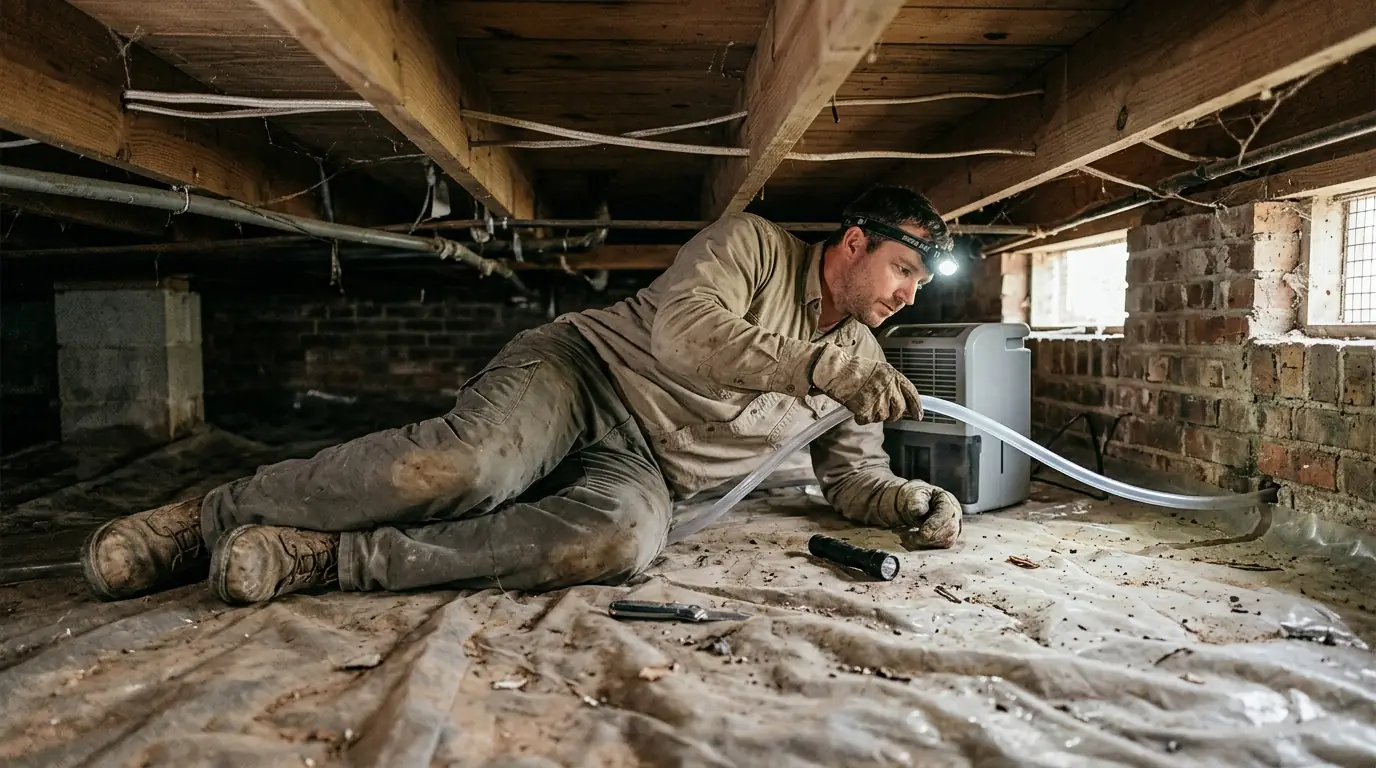
A crawl space dehumidifier is a sealed, self-draining unit that sits under the house and holds the crawl space air at a set humidity. It protects floor framing, ducts and pipes rather than drying the rooms above. Zeltman Heating & Air sizes the unit by crawl space volume, routes the condensate out from under the house and checks whether the vents and ground cover need attention first.
Why crawl space air ends up in your floors, ducts and living room
A crawl space is a pocket of air that sits directly on the ground. In summer, the outdoor air drifting in through foundation vents is warm and loaded with water. When that air meets cooler floor framing, supply ducts and cold water pipes, its moisture condenses on them. That is where the drips, the rusty straps and the musty smell come from.
Air from below does not stay below. Warm air rises through a house and escapes through the upper floors and the attic, so replacement air gets drawn up through gaps around plumbing, wiring and duct boots in the floor. Some of what you breathe in the living room started out under the house. If it smells like damp earth down there, the hallway often does too.
A crawl space dehumidifier treats that space directly. It's a low-profile, sealed unit built to run in a dusty, damp place, and it has its own humidity control. It pulls water out of the crawl space air and sends it away through a drain line or a small pump. It works best when the crawl space is closed off from the outdoors, with a ground cover over the dirt and the vents sealed, so it isn't trying to dry the whole yard.
This is a different job from a whole-house dehumidifier, which ties into the ductwork and dries the rooms you live in. If the bedrooms feel clammy, that's the tool for the house. If the problem is wet joists, sweating ducts and a smell rising through the floor, the crawl space unit goes where the water is. Some homes need both, and we'll explain which one should come first.
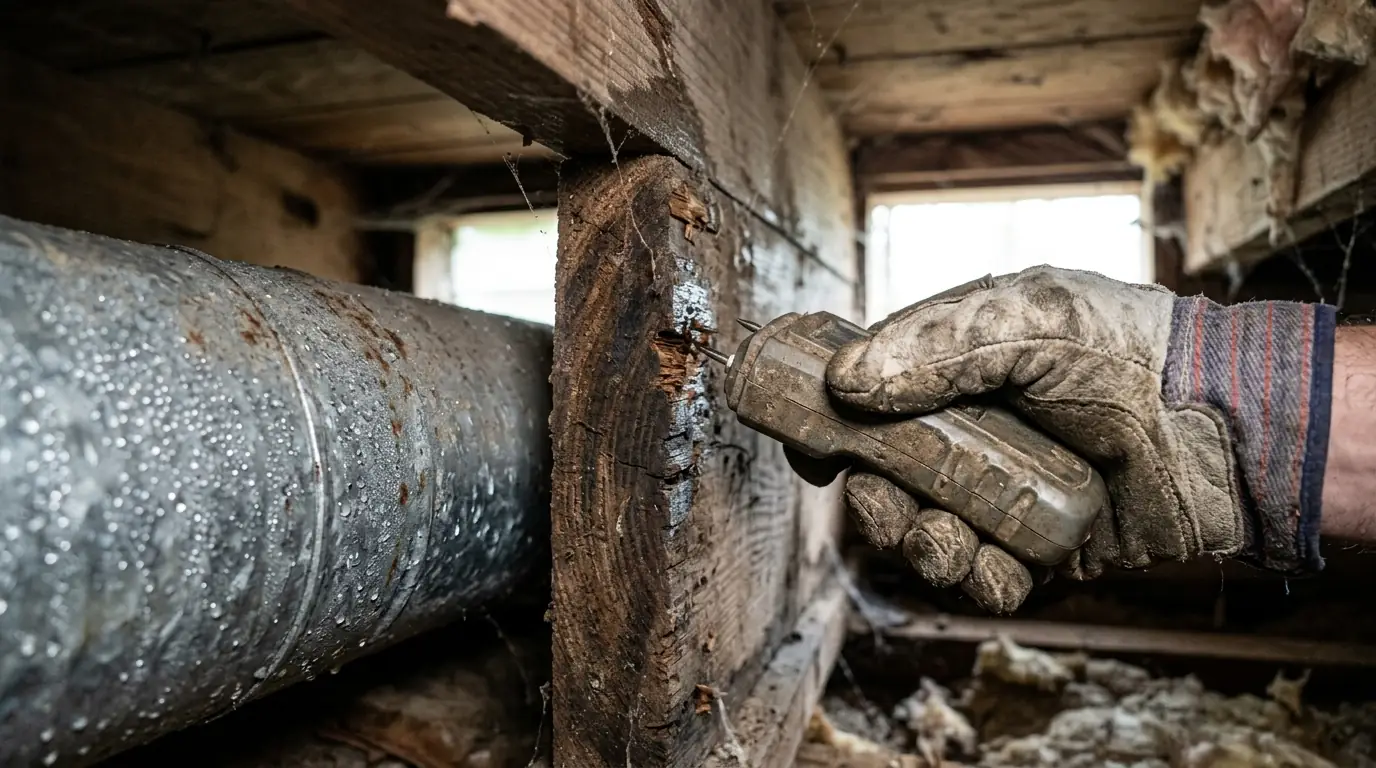
What we measure in the crawl space before sizing a unit
- Relative humidity and temperature under the house, compared with outdoors and the living space
- Wood moisture readings on joists, sill plates and the subfloor at several spots
- Length, width and height of the crawl space to work out its air volume
- Ground cover condition: bare dirt, torn plastic or a full vapor barrier
- Foundation vents, access doors and gaps that let outdoor air in
- Standing water, soggy soil and any plumbing leaks dripping onto the dirt
- Supply ducts, duct jackets and the air handler for sweating, rust and loose seams
- A drain route out from under the house and a protected outlet for the unit
What a crawl space dehumidifier costs in Birmingham
$1,385 to $2,870
A standard unit in a crawl space that already has a good ground cover and sealed vents, with an easy gravity drain, sits near the low end. Higher capacity for a large or very wet crawl space, a condensate pump, a new outlet or tight access moves the price up. Ground cover and vent work are priced on their own, and you see every number before we begin.
Ask for a price (659) 777-4129What moves the number
- Crawl space volume
- A large footprint or a tall crawl space holds more air and needs a higher capacity unit.
- How wet it is now
- Bare dirt, open vents or soggy soil call for more capacity, or for fixing the moisture sources before the unit goes in.
- Drain route
- A short gravity drain through the rim joist is simple. A pump and a long run out to the yard add parts and time.
- Power
- Some crawl spaces have no outlet at all, so a new circuit has to be added for the unit.
- Access and clearance
- A low crawl space with a small access door makes carrying, setting and leveling the unit slower work.
How a crawl space dehumidifier gets installed
Find the water source first
We look for plumbing leaks, standing water and downspouts dumping against the foundation. No dehumidifier can keep up with liquid water coming in.
Close up the crawl space
We explain what the ground cover and vents need. Bare dirt and open vents in July hand the unit far more moisture than it should ever face.
Size and set the unit
Capacity is matched to the crawl space volume and how wet it is. The unit sits level on blocks or hangs from the joists, clear of the dirt.
Route the condensate
The drain runs by gravity through the rim joist, or a condensate pump lifts it out, and it discharges away from the foundation instead of onto the crawl space floor.
Set the humidity and recheck
We set the target humidity, let the unit run and compare the readings, including wood moisture, so you can see the space drying down.
Signs the crawl space under your house needs its own dehumidifier
A musty smell near the floor
The odor is strongest in closets, low cabinets and rooms over the crawl space, and it gets worse after rain or on muggy evenings.
Ducts and pipes dripping in summer
Supply ducts and cold water lines bead up when the air around them sits near its dew point. The drips soak insulation and the dirt below.
Cupping or soft wood floors
Hardwood boards that rise at the edges, or a floor that feels spongy underfoot, often point to a damp subfloor and joists underneath.
Insulation sagging between joists
Fiberglass batts soak up moisture, grow heavy and drop out of the floor cavities, which also leaves the floor colder in winter.
Rust and mildew under the house
Rusty duct straps, a corroding air handler base or white and gray growth on the joists show the space has stayed wet for a long time.
A newly sealed crawl space
Once a crawl space is closed off from outdoor air, it still needs a way to remove the moisture that comes from the ground and the house above.
Crawl space moisture in Birmingham homes
Birmingham's red clay holds water and drains slowly, and many lots slope toward the house on one side. After a heavy rain, the uphill side of a crawl space can stay damp for days. Add muggy summer nights and afternoons in the 90s, and a vented crawl space spends much of the year close to the point where wood and ducts start to sweat.
We see this most under the 1950s through 1970s brick ranches in Huffman, Center Point, Roebuck and Hueytown, where the ductwork runs below the floor. A Goodman or Rheem air handler parked in that damp air rusts from the base pan up. Pinson's valley setting adds moisture that shows up in the ducts, and Vestavia Hills split-levels often hide low, tight crawl spaces. Our base on 15th Avenue North keeps Crestwood and East Lake close by, and crawl space calls come from every corner of the metro.
Areas we cover most often
We repair and replace equipment from these manufacturers, plus most other makes.
Questions about crawl space dehumidifier in Birmingham
A crawl space dehumidifier dries only the air under the house, protecting framing, ducts and pipes. A whole-house unit connects to the ductwork and dries the rooms you live in. Musty floors and sweating ducts call for the crawl space unit, while clammy bedrooms point to the whole-house one.
It runs, but it fights a losing battle. Open vents keep letting in humid summer air, so the unit runs almost nonstop and the space stays damp. It works the way it should once the vents are sealed and the dirt is covered with a vapor barrier.
We size it from the crawl space volume, meaning its length, width and height, and from how wet the space is today. A sealed crawl space with a good ground cover needs less capacity than one over bare dirt. An undersized unit runs constantly and never catches up.
Into a line that runs out from under the house by gravity, or into a condensate pump that pushes it out. We discharge it away from the foundation so the water doesn't soak back into the clay. It should never drain onto the crawl space floor.
The EPA advises holding indoor humidity below 60 percent, and that ceiling works under the floor too. Most crawl space units end up set in the 50s, which keeps framing and ducts from sweating. We choose the setting after looking at your readings and the wood moisture.
Clean or replace its filter a few times a year, since crawl spaces are dusty, and make sure the drain line or pump still discharges outside. Check the humidity reading after big rains. We look at the filter, drain and coil during a maintenance visit too.
Related services and reading
- Whole-House DehumidifierDucted dehumidifiers that pull sticky Birmingham humidity out of the whole house.
- Ductwork Repair and SealingDisconnected runs, crushed flex, sweating ducts and leaky joints in attics and crawlspaces.
- Condensate Drain Line RepairClogged drains, tripped float switches, full pans and water on the ceiling.
- Indoor Air Quality TestingHumidity, particle and airflow readings that show what is actually in the air.
- Sweating, leaking, crushed: duct trouble in older homesDuctwork guide
- Why your AC can't keep up on muggy Birmingham afternoonsCooling guide
Need crawl space dehumidifier in Birmingham?
We answer 24/7. Tell us what the system is doing and we will tell you what happens next.