Why ducts in older Birmingham homes have such a hard life
Your ducts carry every bit of air your system heats or cools. In most local homes, they also run where nobody goes. In the 1950s to 1970s brick ranches of Crestwood, Roebuck, Huffman and Center Point, that usually means a crawlspace. In the older homes of Avondale, Norwood and Glen Iris, it can mean crawlspace runs plus attic ducts added decades after the house was built.
Both spaces are hard on ductwork. A crawlspace on a sloped red clay lot stays damp most of the year. An attic under a dark roof can pass 130 degrees on a July afternoon. Ducts that sit in those conditions for 30 or 40 years sag, split, sweat and pull apart, and the whole system pays for it.
The tricky part is that duct problems rarely look like duct problems. They look like an AC that cannot keep up, a back bedroom that never cools or a power bill that keeps climbing. That is why we check the ducts before anyone talks about bigger equipment.
Sweating ducts in a humid crawlspace
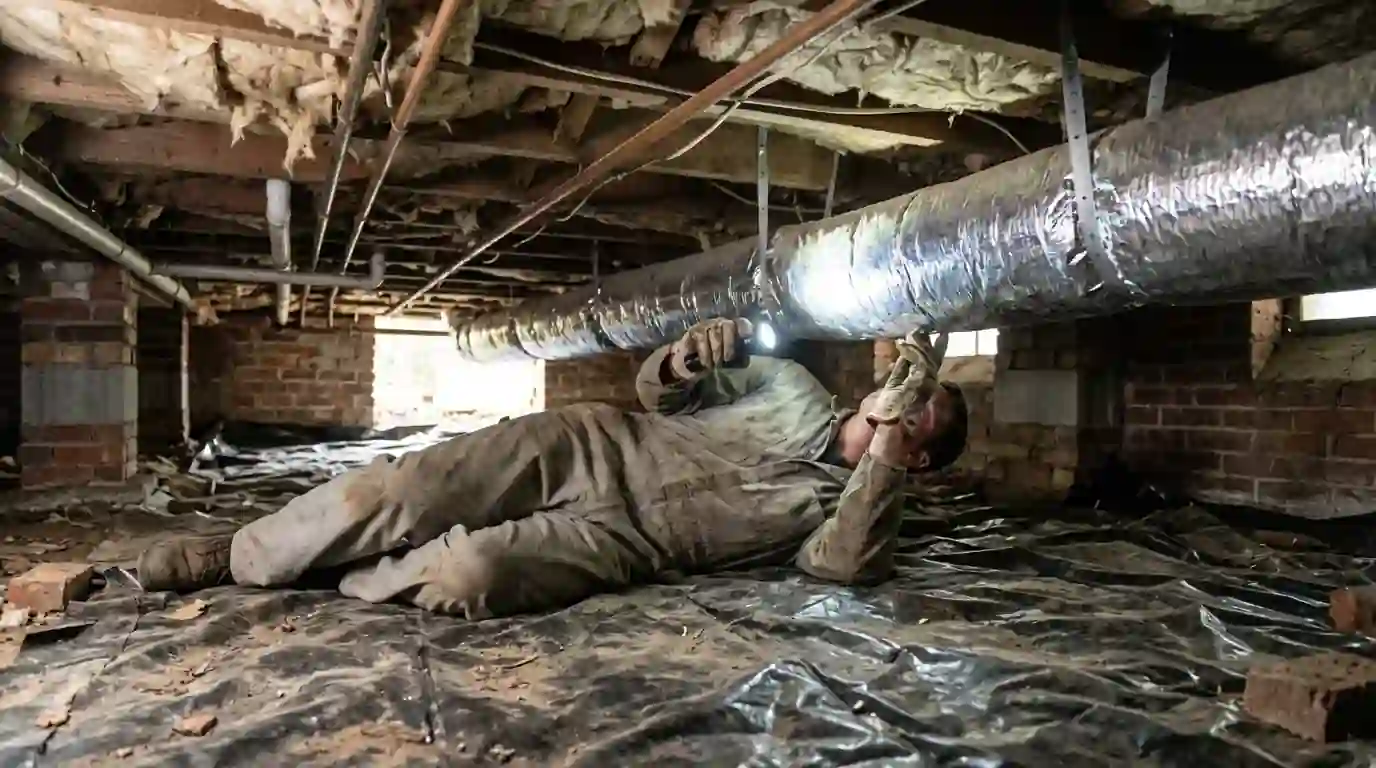
Supply ducts in summer carry air in the mid 50s. Birmingham crawlspace air in July is warm and loaded with moisture. When that air touches a duct surface colder than its dew point, water condenses on the outside, the same way a glass of iced tea sweats on the porch.
A well-insulated duct with an intact vapor jacket keeps that from happening. Trouble starts when the insulation is torn, compressed or missing, often from old repairs, pest damage or someone crawling over it. Water then drips onto the vapor barrier or bare soil, soaks the insulation and can rot floor joists and subfloor over time.
- Water droplets or a wet sheen on duct surfaces in summer
- Insulation that hangs loose, sags or feels damp to the touch
- Puddles or dark staining on the plastic vapor barrier under the ducts
- A musty smell in the house when the system starts up
- Soft spots or cupped wood flooring above supply runs
The fix usually has two parts. First, repair or replace the damaged insulation with a sealed vapor jacket. Second, deal with the crawlspace moisture itself, since a torn vapor barrier, poor drainage at the foundation or open vents on a muggy day will keep feeding the problem.
Crushed flex and disconnected boots
Flexible duct is quick to install and forgiving in tight spaces, but it only works when it is fully stretched and well supported. Flex that is kinked around a joist, pinched by a narrow strap or stepped on during a cable install can lose much of its airflow. In long runs, sagging between hangers has a similar effect.
Boots are the metal fittings that join a duct to the register in your floor or ceiling. Over the years, the seal between the boot and the opening fails, or the duct slips off the boot entirely. When that happens, conditioned air pours into the crawlspace, the attic or a wall cavity instead of the room.
How to tell a run has come apart
A room with weak airflow next to rooms that blow hard is the classic sign. Others include a ceiling register with dust streaks around its edges, a floor register that whistles, or a room that changes temperature far slower than the rest of the house. You can check each register with your hand or a strip of tissue, which takes a few minutes and tells us where to look first.
Attic heat, mastic and the tape that fails
Attic ducts lose cooling through heat gain as well as leaks. A duct with thin or worn insulation running across a summer attic warms the air inside it before that air reaches the far rooms. That is why bedrooms at the end of a long attic run are often the warmest rooms in the house.
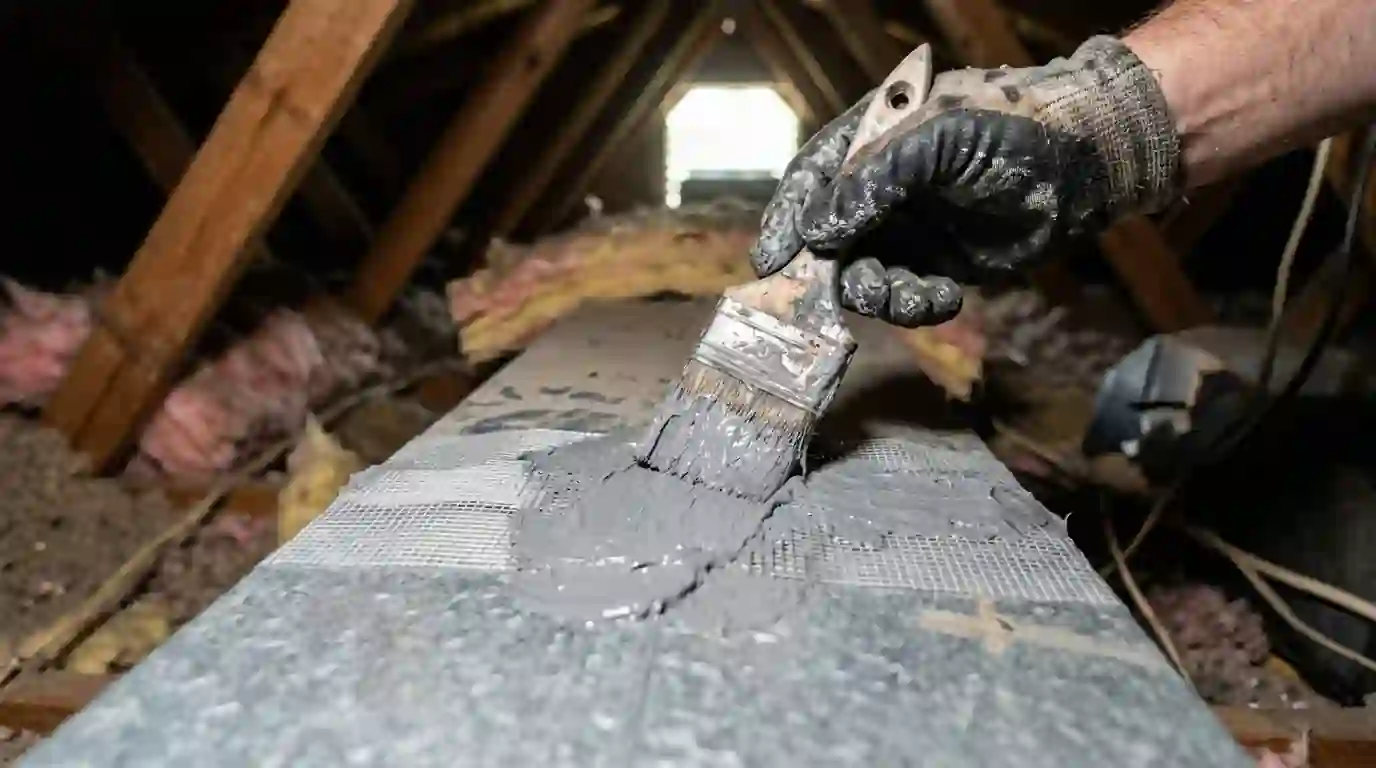
Leaks make it worse, and the material used to seal them matters. Cloth duct tape, despite the name, dries out and lets go in attic heat within a few years. We seal metal joints and takeoffs with mastic, a thick paste brushed over fiberglass mesh, and use foil tape made for ducts where tape belongs. On flex connections, the inner liner gets a proper clamp before the insulation jacket is pulled over and sealed.
- Mastic: stays flexible once cured, fills small gaps and lasts for decades on metal duct seams.
- Foil duct tape: useful for some joints and covers, but only the kind labeled for ductwork.
- Cloth duct tape: fails in attic and crawlspace temperatures and should never be the only seal on a joint.
- Insulation: flex duct sold today commonly comes in R-6 or R-8, and attic runs benefit from the higher value.
What a duct repair visit includes and what it costs
A useful duct visit starts with measurements. We check static pressure at the air handler, airflow at the registers and the temperature of air leaving the farthest supply runs. Then we go into the crawlspace or attic and look at every reachable joint, boot, strap and insulation jacket. You get photos of what we find, so you can see the problem instead of taking our word for it.
Many homes need targeted duct repair and sealing: reattaching boots, re-strapping sagging flex, replacing crushed sections and sealing joints with mastic. In the Birmingham area that work typically runs $385 to $1,470, depending on how many runs need attention and how tight the space is. When the ducts are original, undersized or badly deteriorated, a full ductwork replacement usually lands between $4,280 and $8,960 for a typical single-system home.
Access moves the number more than anything else. A tall crawlspace with a clean vapor barrier is a quicker job. A low crawlspace with standing water, or an attic with little room to move, takes longer and sometimes needs moisture work first.
What you can safely check on your own
You don't need to crawl under the house to gather useful clues. These checks are safe for any homeowner, and they help us find the problem faster.
- Change the filter and note how dirty the old one was.
- Open every supply register and move furniture or rugs off them.
- Feel the airflow at each register with the system running and note the weak ones.
- Look for ceiling stains or dust streaks around registers.
- From the crawlspace door, use a flashlight to look for hanging ducts, standing water or torn insulation. Stay out if it is wet or you see pests or exposed wiring.
- Keep notes on which rooms run hot or cold and at what time of day.
Skip the summer attic entirely. Heat up there can make people sick quickly, the footing is poor and it is easy to step through a ceiling. Leave the attic, the crawlspace interior and any electrical work to us.
Key takeaways
- Duct trouble usually shows up as hot rooms, high bills or dust, not as obvious damage.
- Sweating crawlspace ducts mean the insulation or vapor jacket has failed, and the crawlspace moisture needs attention too.
- Mastic outlasts cloth duct tape by decades on metal duct joints.
- Check register airflow and look in from the crawlspace door, but leave the attic and the crawl to us.
Questions readers ask
Cold supply air makes the duct surface cooler than the dew point of humid crawlspace air, so water condenses on it. Intact insulation with a sealed vapor jacket prevents that. Dripping usually means the insulation is torn, compressed or missing, and the crawlspace itself may be too damp.
Yes. A duct that has slipped off its boot dumps cooled or heated air into the crawlspace or attic, so the system runs longer to reach the thermostat setting. In summer, leaks on the return side also pull humid air into the house, which adds to the load.
No. Cloth duct tape dries out and loses its grip in attic and crawlspace temperatures, often within a few years. Metal joints should be sealed with mastic over fiberglass mesh, and any tape used should be foil tape made and labeled for ductwork.
Replacement makes sense when the ducts are original and badly deteriorated, too small for the airflow your system needs, or failing in many places at once. If most runs are sound and the trouble is a few loose boots and crushed sections, repair and sealing is usually the better value.
Services mentioned in this guide
- Ductwork Repair and SealingDisconnected runs, crushed flex, sweating ducts and leaky joints in attics and crawlspaces.
- Ductwork ReplacementNew supply and return ductwork designed for the airflow your system actually needs.
- Hot and Cold Room FixesAirflow testing and balancing for rooms that never match the thermostat.