Attic fans and attic ventilation in Birmingham, AL
On an August afternoon the attic over a Birmingham house can pass 130 degrees, and your air handler and ducts may be sitting in it. We look at how the attic breathes, then fix the intake, the exhaust or the leaks in the ceiling below.
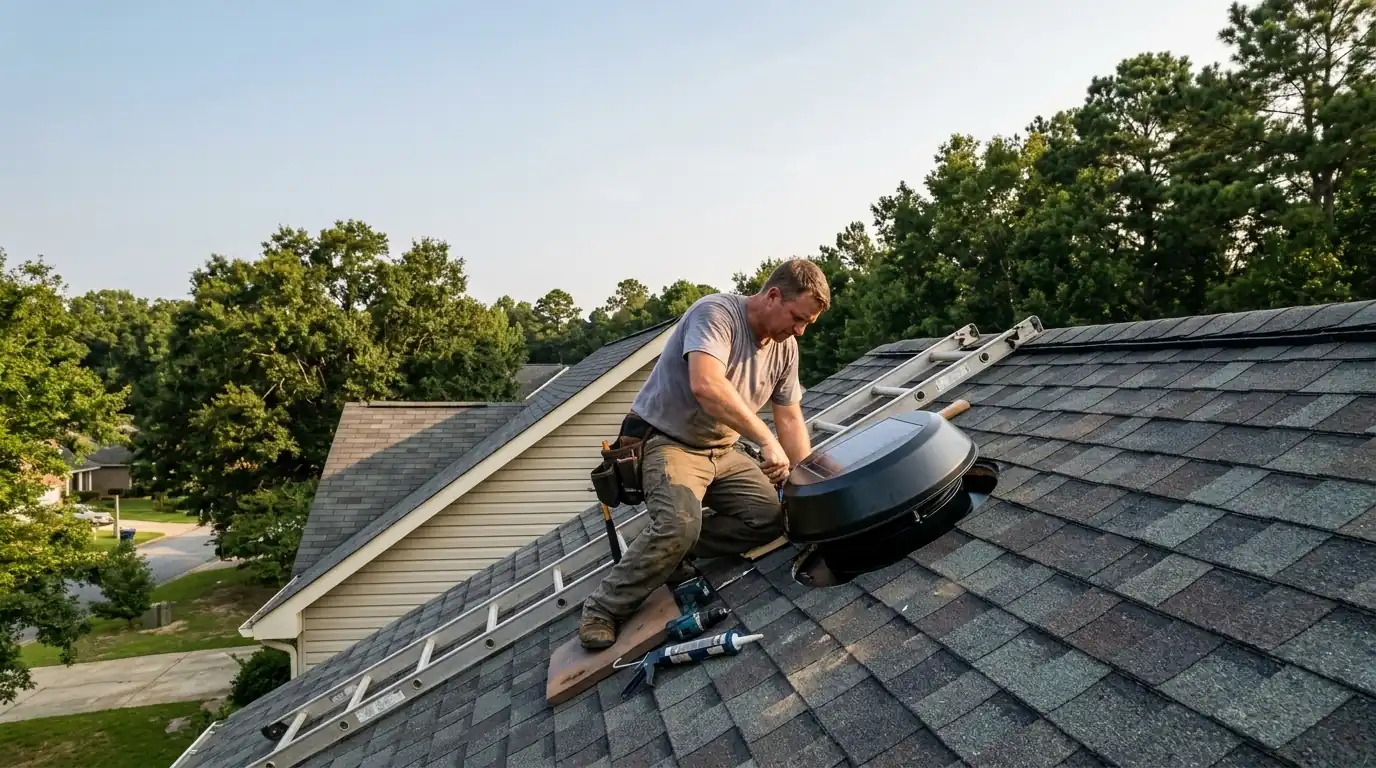
Attic ventilation lets hot, damp air out near the roof peak while outside air comes in low at the eaves. Ridge, soffit and gable vents do it passively, and powered or solar attic fans push it harder. Zeltman Heating & Air checks the vent balance and the ceiling below before adding a fan, because a fan over a leaky ceiling can pull cooled air out of your rooms.
How an attic is supposed to breathe, and where it goes wrong
A vented attic works on a simple path. Cooler outside air enters low, through soffit vents under the eaves, and hot air leaves high, through a ridge vent or gable vents near the peak. Heat rising off the roof deck keeps that air moving on its own. When intake and exhaust are roughly in balance, the whole underside of the roof gets swept.
Most problems come from a broken path. Insulation blown over the soffits blocks the intake. A roof with a ridge vent plus a few box vents can short circuit, with air entering one exhaust opening and leaving through another. Some older homes have only two small gable vents, which move very little air across the middle of the attic.
Powered attic fans add a motor to the exhaust side, switched by a thermostat and sometimes a humidity control. Solar fans do the same with a small panel and no wiring, running hardest when the sun is out. Either one has to get its replacement air from somewhere. If the soffits can't supply it, the fan draws air up from the house through ceiling leaks around recessed lights, the attic hatch, bath fans and plumbing chases. That is the cooled, dried air you paid your AC to make.
Ventilation also has limits worth knowing. It lowers attic temperatures on sunny afternoons, but it can't bring an attic down to the outdoor temperature, and it doesn't replace insulation or air sealing. In a humid climate, the outside air coming in carries moisture along with it. And if the roof deck was sprayed with foam to create a sealed attic, it shouldn't get vents or fans at all.
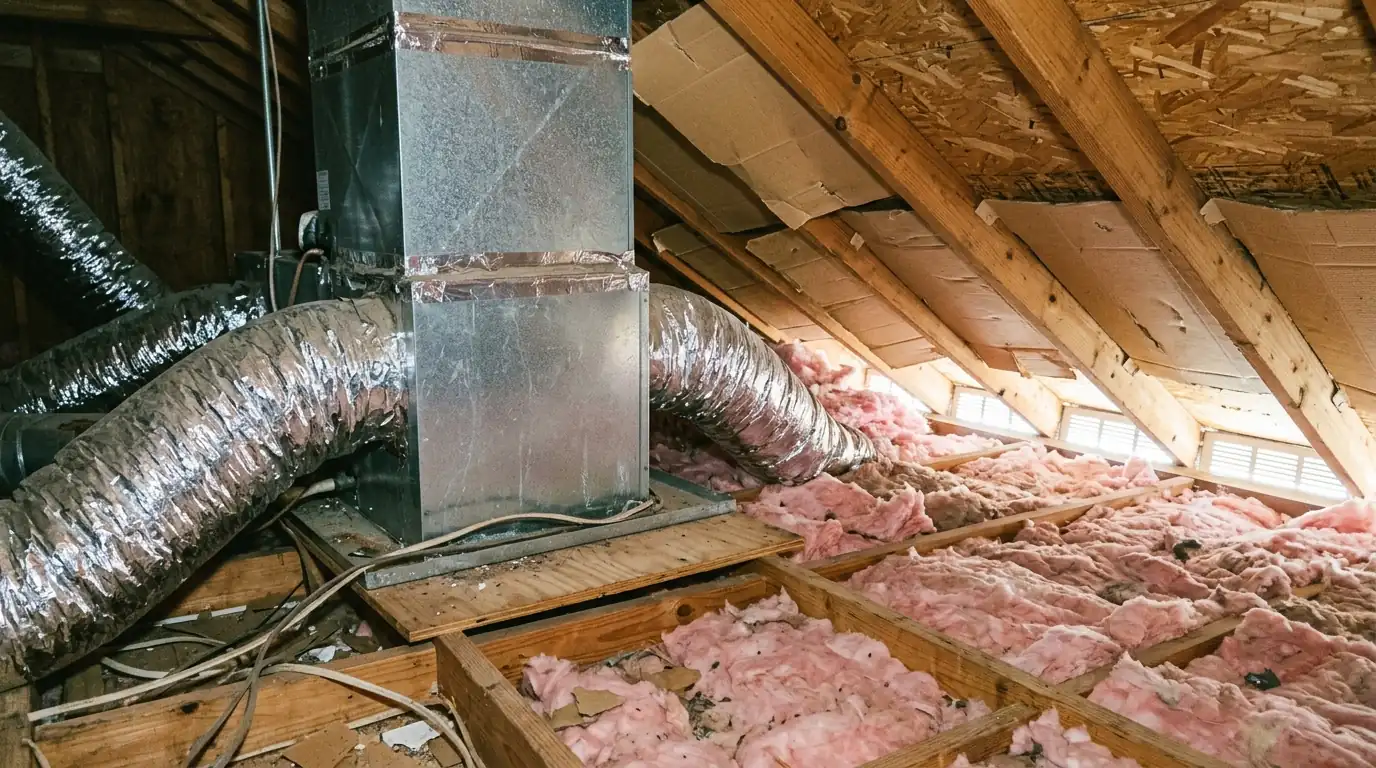
What we look at before adding a vent or attic fan
- Soffit vents, eave openings and whether insulation is blocking them
- Ridge, gable, box and turbine vents already on the roof, and how they interact
- Ceiling leaks at the hatch, recessed lights, bath fans, top plates and chases
- Attic temperature and humidity compared with outdoors on the day of the visit
- Roof deck, nail tips and insulation for staining, rust or dampness
- Air handler cabinet, drain pan and duct jackets for heat damage and sweating
- Any gas furnace or water heater flue in the attic before a powered fan is considered
- Existing fan wiring, thermostat setting and motor condition
What attic fans and attic ventilation cost in Birmingham
$335 to $1,865
Replacing a failed attic fan motor or adding baffles at the eaves sits near the low end. A new powered or solar fan, added soffit vents, or a ridge vent paired with sealing the ceiling below moves toward the top. Roof pitch, attic access and how much sealing the attic floor needs make the biggest difference. You get the price before work starts.
Ask for a price (659) 777-4129What moves the number
- Type of work
- Swapping a fan motor or its thermostat is small. Cutting in a ridge vent or adding soffit vents is a larger job.
- Powered or solar
- A solar fan skips the wiring but costs more for the unit itself. A wired fan needs a circuit and a control.
- Air sealing the ceiling
- Sealing the hatch, lights and top plates takes time in a crowded attic, but it keeps the fan from pulling air out of the house.
- Roof pitch and height
- Steep or two-story roofs need more safety setup and take longer to work on.
- Attic access
- A pull-down stair over a hallway is easy. A small scuttle hole in a closet with low headroom slows everything down.
How we fix attic ventilation
Map the airflow path
We trace where outside air enters and where it leaves, and note any vents that compete with each other for the same air.
Seal the ceiling first
Gaps between the house and the attic get sealed, so any exhaust pulls outside air through the soffits instead of cooled air from your rooms.
Open or add intake
Baffles go in where insulation blocks the eaves, and soffit vents are added where the overhangs have none.
Choose one exhaust method
Depending on the roof, that means a ridge vent, gable vents or a powered or solar attic fan, set up so the openings don't fight each other.
Check the result
We confirm the fan control settings, look over the air handler and ducts again and explain what to watch for through the summer.
When attic ventilation work makes sense
Soffit vents buried under insulation
Blown insulation often covers the eave openings. Baffles between the rafters reopen the intake so the rest of the vents can do their job.
Mixed exhaust vents on one roof
A ridge vent combined with box vents, gable vents or a powered fan can pull air in through the wrong opening and leave hot pockets.
Signs of attic moisture
Dark staining on the roof deck, rusty nail tips or damp insulation in winter suggest moist air is collecting instead of moving out.
Ducts and an air handler in the attic
Equipment that lives in a 130 degree space does better when the attic is vented properly and the ceiling below it is sealed.
An attic fan that never shuts off
A fan that runs nonstop has a stuck or misset thermostat, or it is straining against an attic with no real intake.
A reroof or new equipment coming
A roof replacement or a new attic air handler is a good moment to correct intake and exhaust while everything is already open.
Attic ventilation in Birmingham-area homes
The 1950s and 1960s brick ranches in Crestwood, Huffman and Roebuck often put the air handler in the attic, with ducts dropping through the ceiling under a roof that has small gable vents or a few box vents. In those homes we usually find the soffits covered by insulation added over the years. Opening the intake and sealing the ceiling helps that equipment more than another fan would.
In Hoover, Trussville and Chelsea, many two-story houses tuck the upstairs air handler into an attic over the bedrooms, sometimes a Trane or Carrier unit squeezed into a low corner. When the second floor runs hot, attic heat is one piece of it, alongside leaky joints that may need duct repair and sealing. From our base on 15th Avenue North we reach the east side quickly and book attic visits throughout the metro.
Areas we cover most often
We repair and replace equipment from these manufacturers, plus most other makes.
Questions about attic fan and attic ventilation in Birmingham
Sometimes a little, and sometimes not at all. An attic fan can cool the attic on sunny afternoons, but over a leaky ceiling it pulls cooled air out of the house and adds AC run time. Sealing the ceiling and opening the soffits usually does more for the bill.
Each has a place. A solar fan needs no wiring and runs only when the sun is out, which lines up with the hottest hours. A wired fan moves more air and can run on a thermostat or humidity control. Both need enough soffit intake to work properly.
Some. A well-vented attic runs cooler and drier than a stuffy one, which is easier on duct insulation and the air handler cabinet. It won't stop duct leaks or sweating from torn duct jackets, though. Those need repair and sealing no matter what the vents are doing.
Usually not. A powered fan near a ridge vent tends to pull outside air in through the ridge instead of the soffits, so only a small strip of the attic gets ventilated. With good soffit intake, a ridge vent on its own normally handles the job.
No. An attic fan moves air only between the attic and the outdoors. A whole-house fan sits in a hallway ceiling and pulls air in through open windows, up through the house and into the attic. In muggy Birmingham summers, that outdoor air brings extra humidity indoors.
Replacing an attic fan or adding baffles at the eaves usually takes a few hours. Cutting in a ridge vent, adding soffit vents and sealing the ceiling can fill a full workday. You get the expected hours along with the price before anything starts.
Related services and reading
- Ductwork Repair and SealingDisconnected runs, crushed flex, sweating ducts and leaky joints in attics and crawlspaces.
- Air Handler and Blower Motor RepairBlower motors, capacitors, control boards and belts on the indoor unit.
- Condensate Drain Line RepairClogged drains, tripped float switches, full pans and water on the ceiling.
- Hot and Cold Room FixesAirflow testing and balancing for rooms that never match the thermostat.
- Sweating, leaking, crushed: duct trouble in older homesDuctwork guide
- Why your AC can't keep up on muggy Birmingham afternoonsCooling guide
Need attic fan and attic ventilation in Birmingham?
We answer 24/7. Tell us what the system is doing and we will tell you what happens next.