
Why humid days feel worse than hot, dry ones
Your air conditioner removes two kinds of heat. Sensible heat is the part a thermometer reads. Latent heat is the energy carried by water vapor, and the only way to remove it is to condense that water on the cold indoor coil.
On a dry 95 degree day, most of the system's capacity goes into lowering the temperature. On a muggy Birmingham afternoon, a much bigger share goes into wringing water out of the air. The thermostat only reads temperature, so it looks like the system is losing ground even while it pulls gallons of water out of the house.
That is why 76 degrees can feel fine one day and sticky the next. Comfort depends on both numbers. The EPA suggests keeping indoor relative humidity between 30% and 50%, and under 60% at most. Above that, skin stays damp, closets smell musty and people reach for the thermostat.
Quick checks you can make before you call
A few simple checks rule out the easy causes. None of them require tools, and none involve opening the equipment.
- Check the filter. A clogged filter cuts airflow, and low airflow can freeze the coil. In spring pollen season a 1 inch filter can load up in a few weeks.
- Set the fan to auto, not on. With the fan on, the blower keeps running after the compressor stops and blows the water on the coil back into the house.
- Look at the outdoor unit. Shrubs, grass clippings and pollen on the coil fins make it work harder. Keep plants trimmed back so air can move freely around it.
- Look at the larger insulated copper line. At the outdoor unit it should feel cool and may sweat a little. Frost or ice on it means turn the system off and call.
- Compare a supply vent with the return. A healthy system usually cools the air about 15 to 20 degrees as it passes the indoor coil.
- Confirm the thermostat settings. Make sure it is set to cool, the schedule is not raising the set point, and the batteries are fresh.
If those checks look normal and indoor humidity still sits at 60% or higher, the cause is usually built into the system or the house itself.
How an oversized AC leaves the house clammy
Plenty of Birmingham homes have more air conditioning than they need. Someone replaced a 3 ton unit with a 4 ton to be safe, or sized it by square footage instead of an ACCA Manual J load calculation. The bigger unit drops the temperature fast and shuts off.
Short cycles are bad for moisture removal. A coil takes several minutes to get cold enough to drip steadily. If the thermostat is satisfied after eight or ten minutes, the coil barely gets wet before the cycle ends, and some of that water evaporates back into the house.
The result is a home that reaches 74 degrees and still feels damp. Turning the thermostat lower usually makes it worse, because the system just short cycles at a colder setting. Our guide on why a bigger AC is not a better AC covers sizing in more depth.
Airflow and coil problems that cut moisture removal
Airflow that is too low
A dirty filter, a clogged coil, a weak blower or crushed ductwork starves the coil of air. The coil runs too cold, frosts over and eventually blocks airflow almost completely. By the time you see ice, the house is losing ground on both temperature and humidity.
Airflow that is too high
The opposite problem is harder to spot. Some blowers are set for high airflow, which helps on dry days but moves air across the coil too quickly to pull out much water. In a humid climate, a technician can often slow the blower slightly on cooling, as long as the coil stays above freezing.
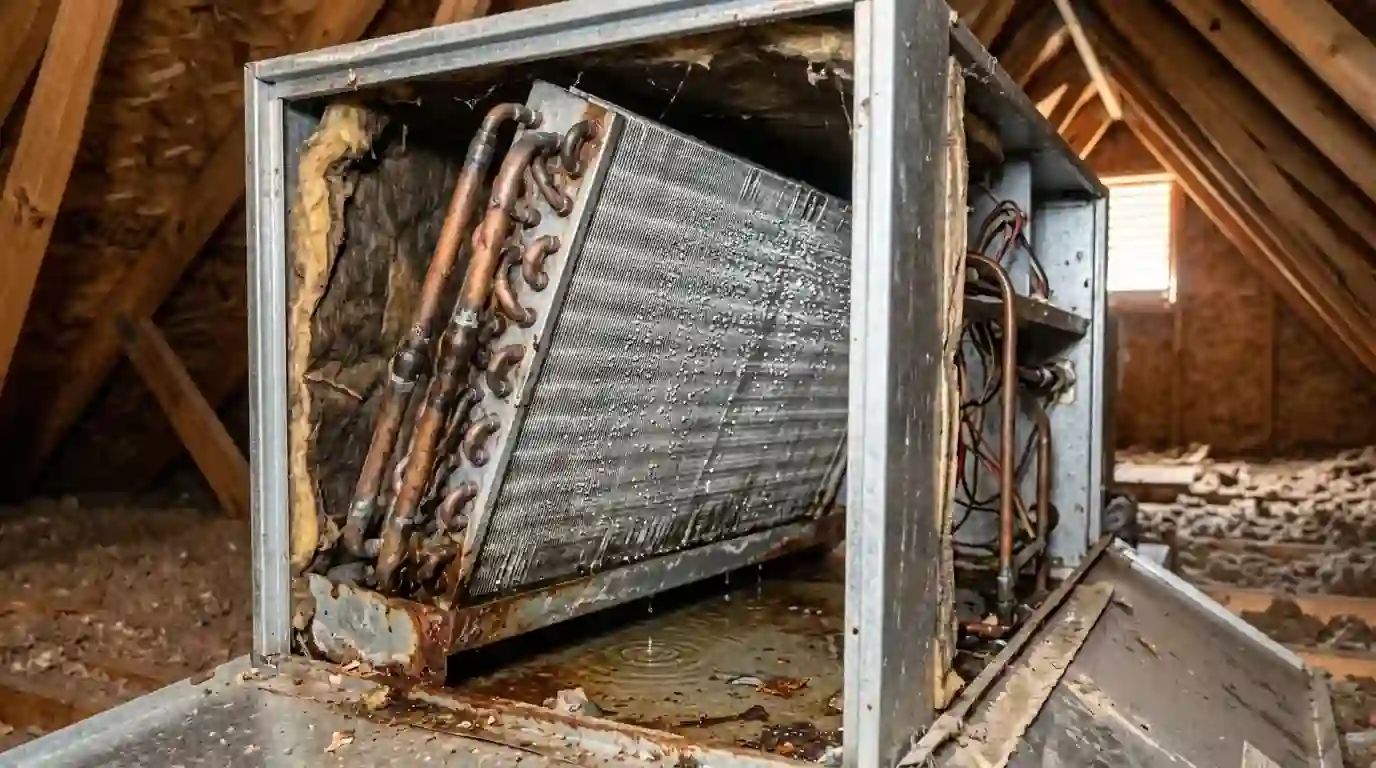
A dirty or leaking coil
Pollen, dust and pet hair that slip past a weak filter build up on the indoor coil. That layer insulates the fins, so less heat and moisture move through them. An evaporator coil cleaning or repair restores the surface the system needs. A slow coil leak lowers the refrigerant charge, and it shows up first as weak cooling on the hottest, wettest afternoons.
Leaky ducts and the house itself add moisture
An air conditioner can only remove the moisture that reaches it. When return ducts leak in a hot attic or a damp crawlspace, they pull humid air straight into the system. Brick ranches in Crestwood and Center Point often still run original ducts, and many joints have loosened over the decades.
Inside the house, daily life adds water too. Showers without exhaust fans, cooking, a wet crawlspace and a lot of houseplants all raise the moisture load. Running bath fans for about 20 minutes after a shower helps, and so does a sealed vapor barrier over a bare dirt crawlspace. Red clay soil holds water, and that moisture rises into the floor system when nothing stops it.
When a whole-house dehumidifier makes sense
Some homes stay damp even with a correctly sized system, a clean coil and tight ducts. Mild, rainy days in spring and fall are the usual trouble. It's warm enough to feel sticky but not warm enough for the AC to run long, so humidity creeps up.
A whole-house dehumidifier ties into the ductwork and removes water on its own control, without overcooling the house. It makes sense in tight newer homes, lake houses, finished basements and homes with an oversized AC that is not ready for replacement. Portable units help one room, but they need emptying and add heat to the space.
Two-stage and variable speed systems help as well. They run long, gentle cycles at low speed, which keeps the coil cold and draining. Many have a dehumidify setting that slows the blower when indoor humidity rises.
Thermostat habits that help on muggy days
The DOE suggests about 78 degrees when you are home in summer as an energy-saving setting. In a damp house, 78 feels warm. At 45% humidity, though, it often feels better than 74 degrees at 62%. Get the moisture under control first, and you can usually raise the set point a degree or two.
Avoid big setbacks on the hottest days. If the house climbs to 85 while you are at work, the system spends the evening pulling stored heat and moisture out of walls, furniture and carpet. A setback of 3 or 4 degrees is much easier to recover from. If the system runs nonstop, can't hold 78 on a mid 90s afternoon, or humidity stays above 60%, call us. We answer 24/7.
Key takeaways
- Humid air adds a moisture load on top of the heat, so an AC can lose ground even while it runs nonstop.
- Aim for indoor humidity between 30% and 50%, and do not let it sit above 60%.
- Oversized systems short cycle and leave the house clammy. A Manual J load calculation sets the right size.
- Keep the fan on auto, change filters often and consider a whole-house dehumidifier if the house stays damp.
Questions readers ask
The temperature is fine, but the humidity is too high, usually above 60%. Common causes are an oversized AC that short cycles, the fan left on instead of auto, high blower airflow, a dirty coil or leaky return ducts pulling in damp attic or crawlspace air.
The EPA suggests 30% to 50% and under 60% at most. In Birmingham summers, 45% to 50% is a comfortable target. A simple digital humidity gauge from a hardware store shows where your house sits, and readings above 60% for days at a time point to a system or house problem.
It can help one room, such as a basement or a damp bedroom, but it has to be emptied or drained and it adds heat to the space. If several rooms feel sticky, a ducted whole-house dehumidifier or a fix to the AC itself usually works better.
On muggy afternoons a large share of the system's capacity goes into removing moisture, so the temperature drops slowly. If it also cannot hold 78 degrees on a mid 90s day, look for a dirty filter or coil, low refrigerant, leaky ducts or an undersized system.