Refrigerant leak repair in Birmingham, AL
If someone has added refrigerant to your air conditioner two summers running, the system has a leak. We find it, repair it and charge the system by weight, so you stop paying for the same refrigerant every year.
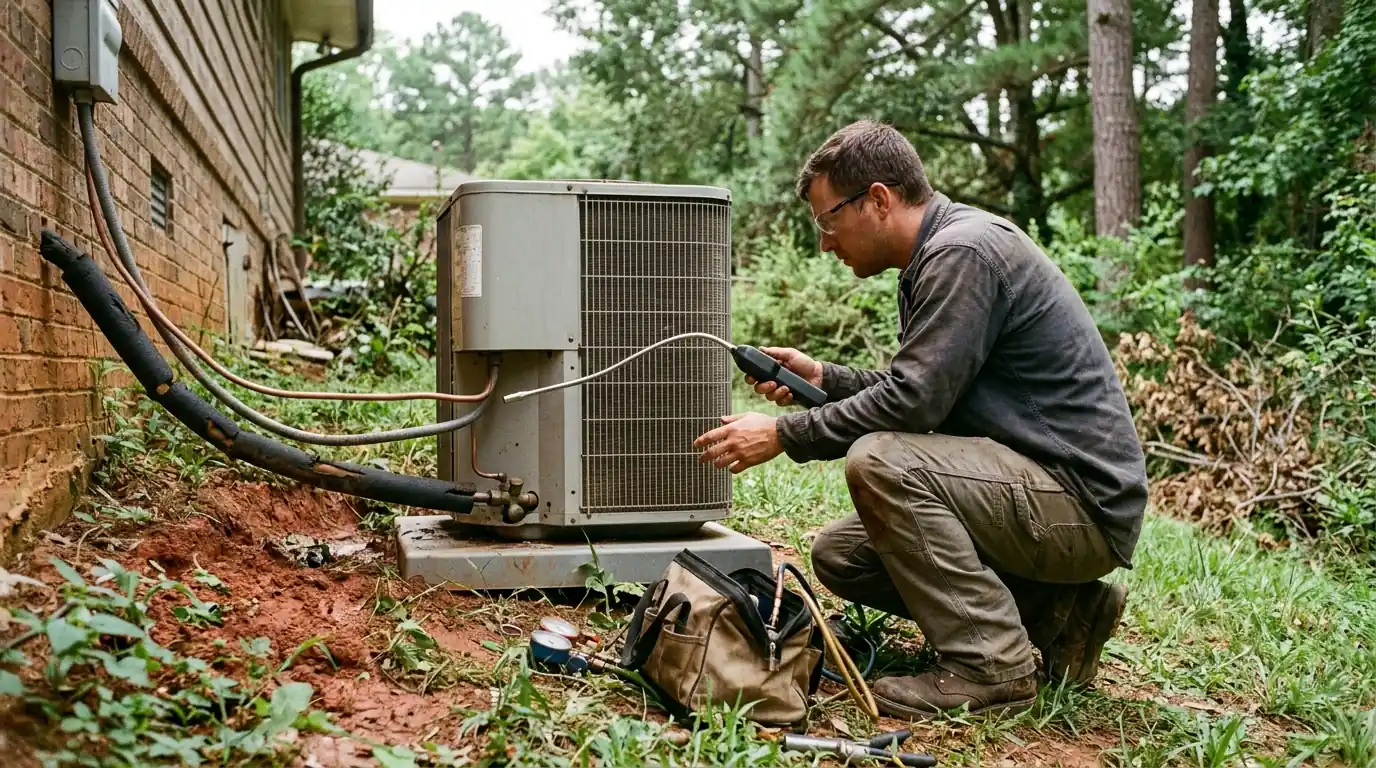
Refrigerant doesn't get used up. If the charge is low, it's escaping through a leak, most often at the indoor coil, a Schrader valve or the line set. Zeltman Heating & Air locates leaks with an electronic detector, bubble solution and a nitrogen pressure test, then repairs, evacuates and recharges. On older R-22 systems we compare repair against replacement with you.
Signs your air conditioner is losing refrigerant
Refrigerant added every year
A system that needed a top-off last summer and needs one again is leaking. The leak usually gets larger over time, not smaller.
Ice on the suction line or coil
Frost on the larger insulated copper line, or ice on the indoor coil, often points to low charge once airflow problems are ruled out.
Hissing or bubbling sounds
A hiss near the indoor unit or the line set while the system runs can be refrigerant escaping from a larger leak.
Oily spots on fittings or the coil
Refrigerant carries compressor oil with it. A dark, oily film at a valve, braze joint or coil bend marks a likely leak site.
Long run times and a muggy house
The system runs nearly nonstop on a warm day, but the house stays a few degrees warm and feels damp.
Cooling that faded over weeks
Cooling that declined gradually, rather than stopping all at once, fits the pattern of a slow leak.
Why a leak needs fixing, not a yearly top-off
An air conditioner's refrigerant circuit is sealed. It should hold the same charge for the life of the system. When a technician has to add refrigerant every spring, the refrigerant is leaking out, and each top-off only covers the problem until next time.
Running low is hard on equipment. The compressor depends on refrigerant flow to stay cool and to carry oil back through the system. A low charge also makes the indoor coil run too cold, so it ices over, cuts airflow and stops pulling moisture from the house. Bills go up while comfort goes down.
The refrigerant type changes the math. R-22 production ended in 2020, so recharging an older system is expensive and getting more so. R-410A is still serviced, though no new systems are built around it. Current systems are built around R-454B and other A2L refrigerants, which call for specific tools and careful handling during any repair.
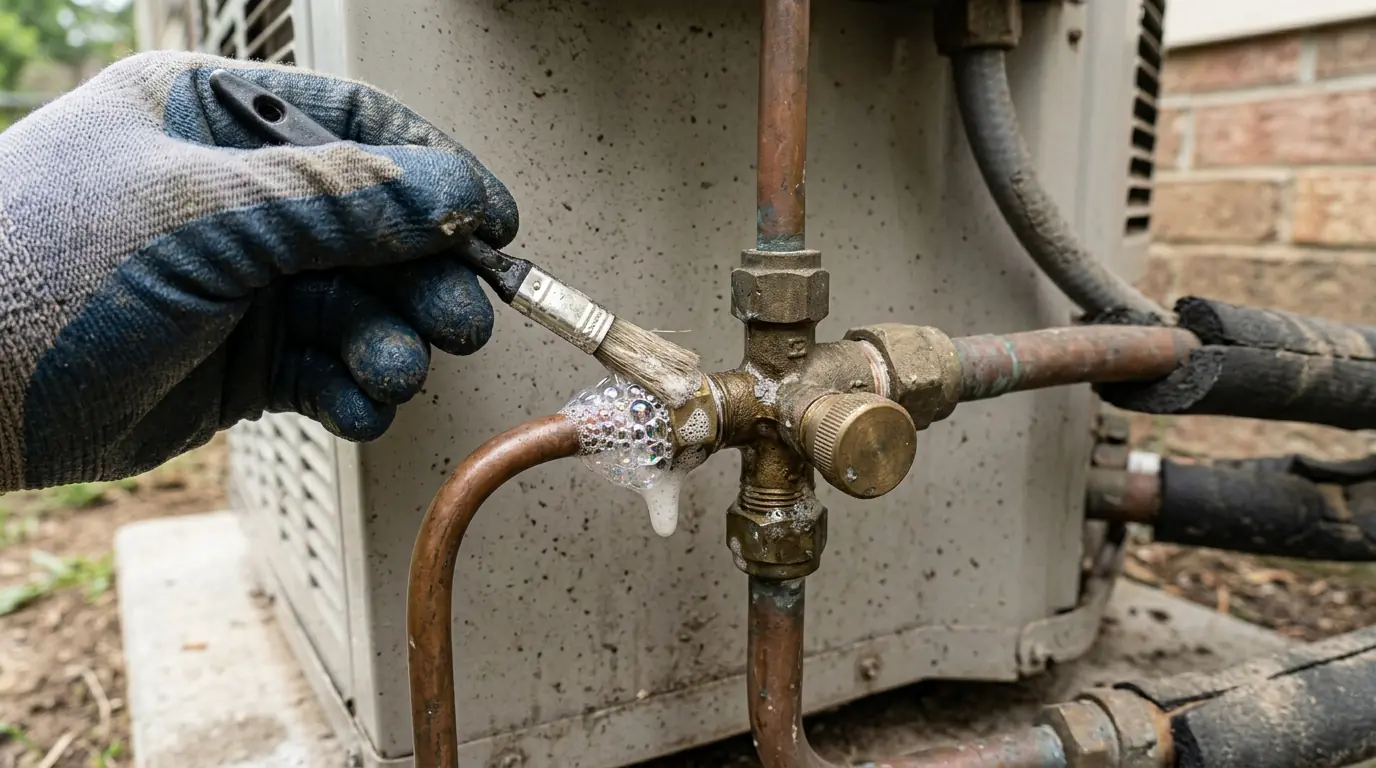
Finding the leak is the real work. Some leaks are big enough to hear, but most are slow pinholes that take a methodical search. We use an electronic detector to narrow the area, bubble solution to pinpoint it and a nitrogen pressure test to prove the system holds once the repair is done.
How a refrigerant leak repair visit works
Confirm the charge is low
We measure first. Plenty of systems blamed on low refrigerant actually have a dirty coil or a weak blower.
Search for the leak
Electronic detection narrows the area, then bubble solution and, when needed, an isolated nitrogen test pinpoint the exact spot.
Options and price
You hear where the leak is, what the repair involves and its price, plus how it compares with replacement on an older system.
Repair and pressure test
We replace the valve core, rebraze the joint or replace the damaged section, then hold nitrogen pressure to confirm the fix.
Evacuate and charge by weight
After a deep vacuum, we weigh in the factory charge, then check superheat or subcooling and the temperature drop.
How we find and confirm a refrigerant leak
- Superheat and subcooling readings to confirm low charge, not an airflow problem
- Electronic leak detector sweep of the indoor coil, outdoor coil and line set
- Schrader valve cores and caps at both service ports
- Bubble solution on suspect braze joints, flare nuts and valve stems
- Line set where it passes through walls, under the house or near mower paths
- Indoor coil tube bends and headers for pinhole corrosion
- Standing nitrogen pressure test after the repair to prove the system holds
- Deep vacuum to a measured micron level before weighing in the new charge
What refrigerant leak repair costs in Birmingham
$340 to $1,780
A leaking valve core with a small recharge sits near the low end. A brazed repair with a nitrogen test and a larger recharge, especially with R-22, sits near the top. A leaking coil usually means coil replacement, which is priced separately. You'll know the repair price, and how it compares with replacement, before we braze anything.
Ask for a price (659) 777-4129What moves the number
- Refrigerant type and amount
- R-22 costs far more per pound than R-410A or R-454B, and a system that's nearly empty needs more of it.
- Where the leak is
- A Schrader core takes moments. A pinhole inside the coil or a line set buried in a wall is a much bigger job.
- How many leaks
- Older systems sometimes have more than one leak, and each confirmed site adds repair time.
- Testing needed
- Some leaks only show up under a nitrogen pressure test with sections isolated, which takes longer than a quick sweep.
- Access
- A coil in a low attic or a line set running under a crawlspace adds labor before the repair even starts.
Leak patterns we find in Birmingham homes
Long, humid cooling seasons keep indoor coils wet for months, and older copper coils in many Birmingham homes corrode into tiny pinholes over time. On steep Redmont Park lots and other hillside streets, outdoor units often sit on terraces with long line sets. Those lines can rub where they cross walls and corners, and the rub points are a frequent find.
In older ranches in Center Point, Roebuck and Huffman, we still find R-22 systems with original line sets. On those, the honest answer is often that replacement costs less over a few summers than chasing leaks. Newer homes in Helena and Moody tend to have R-410A systems from brands like Goodman, Rheem and Carrier, where a repair is usually well worth doing.
Areas we cover most often
We repair and replace equipment from these manufacturers, plus most other makes.
Questions about refrigerant leak repair in Birmingham
We confirm the charge is low, then sweep the coils, valves and line set with an electronic detector. Suspect spots get bubble solution. When a leak is hard to pin down, we isolate sections and run a nitrogen pressure test.
Only as a short-term step while a repair or replacement is planned. Leaks tend to grow, low charge strains the compressor, and refrigerant released into the air is wasted money and an environmental problem. Fixing the leak once costs less than paying every summer.
The indoor coil is the most common spot, followed by Schrader valve cores, flare fittings and the line set where it rubs or passes through walls. Outdoor coils and braze joints near the compressor can leak too, especially on older units.
Sometimes. A leaking valve core on an otherwise healthy R-22 system is worth fixing. A leaking coil or a system needing many pounds of R-22 usually isn't, because the refrigerant alone is expensive. We price both repair and replacement for you.
Yes. R-454B is classed as mildly flammable, and equipment built for it includes safeguards such as leak sensors. Repairs need the right tools and procedures, followed by a pressure test and a deep vacuum before the system is recharged.
A simple valve core fix and recharge can be done in a couple of hours. Finding a slow pinhole, brazing and running a standing nitrogen test can take most of a day. Coil replacements are scheduled once the part arrives.
Related services and reading
- Evaporator Coil RepairFrozen, dirty or leaking indoor coils cleaned, repaired or replaced.
- AC RepairWarm air, short cycling, ice on the lines or a dead outdoor fan. We find the cause and fix it.
- AC ReplacementSwap an aging or R-22 system for a matched, efficient condenser and coil.
- AC Tune-UpSpring service that cleans, measures and tightens before the first heat wave.
- Repair or replace an older AC: how to decideCosts guide
Need refrigerant leak repair in Birmingham?
We answer 24/7. Tell us what the system is doing and we will tell you what happens next.