Start with the age of the system
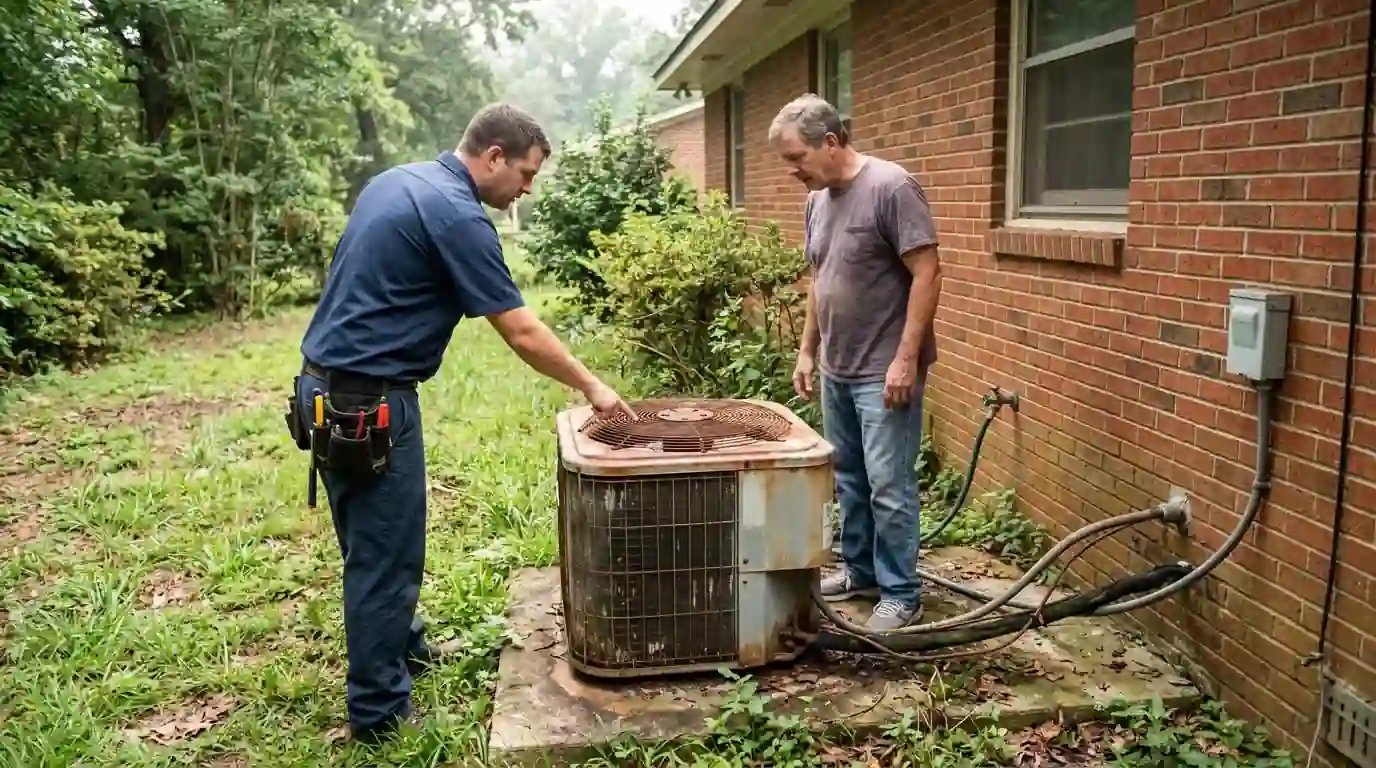
Central air conditioners in Birmingham commonly last about 12 to 15 years, and some run longer with steady care. Our long cooling season and heavy humidity are hard on outdoor coils, fan motors and electrical parts. A unit that runs from May into October works far more hours than one in a milder climate.
Age alone does not decide anything. A 16 year old system with a failed capacitor is usually worth fixing. A 9 year old system with a failed compressor and no remaining parts coverage may not be. Age matters because it predicts what is likely to fail next.
You can find the age on the data plate of the outdoor unit. The serial number usually encodes the year it was built, and we can read it for you on any visit.
Maintenance history matters too. A system that got a spring tune-up most years, with clean coils and a clear drain, often has more life left than its age suggests. One that ran for years on clogged filters and a matted outdoor coil may be worn well past its age.
The R-22 question for systems installed before 2010
If your system went in before about 2010, check which refrigerant it uses. Many older systems run on R-22, and production of R-22 ended in 2020. Only recovered and recycled supply remains, so recharging an R-22 system is expensive and gets harder every year.
A small leak on an R-22 system turns every summer into a recharge bill. A refrigerant leak repair can still make sense if the leak is easy to reach and the rest of the system is sound. A leaking indoor coil or a failing compressor on an R-22 system is usually where replacement wins.
Topping off with a different refrigerant is not an option. The substitutes that exist bring their own costs and compromises, and any refrigerant work is a job for a technician, never a homeowner.
Typical repair costs compared with a new system
Here are typical Birmingham-area ranges we see. They are not quotes. Access, brand, refrigerant type and the time of the call all move the number.
- Capacitor or contactor: $165 to $345
- Outdoor fan motor: $385 to $715
- Leak search and repair: $435 to $1,670, plus refrigerant
- Evaporator coil replacement: $1,240 to $2,680
- Compressor replacement: $1,875 to $3,460
- New condenser and matched coil: $5,480 to $9,870
The first two items are routine AC repair on a system with life left. The coil and compressor are where the decision gets real, because each one costs a large share of a new system and leaves every other old part in place.
A replacement price should spell out what is included. Look for the condenser, the matched indoor coil, the line set (new, or cleaned and pressure tested), the pad, the electrical disconnect, drain connections, any thermostat change, permits and removal of the old equipment. Two prices that look far apart are often covering different work.
A rough rule of thumb: age times repair cost
A quick way to frame the choice is to multiply the age of the system by the repair cost. If the result is over 5,000, replacement deserves a serious look. If it is well under, repair usually makes more sense. Treat it as a rough rule of thumb and a starting point, not a verdict.
- A 9 year old system needing a $415 fan motor: 9 times 415 is 3,735. Repair it.
- A 14 year old system needing the same motor: 14 times 415 is 5,810. Compare it with replacement, especially if it runs on R-22.
- A 12 year old system needing a $2,680 coil: 12 times 2,680 is 32,160. Replacement is almost always the better use of the money.
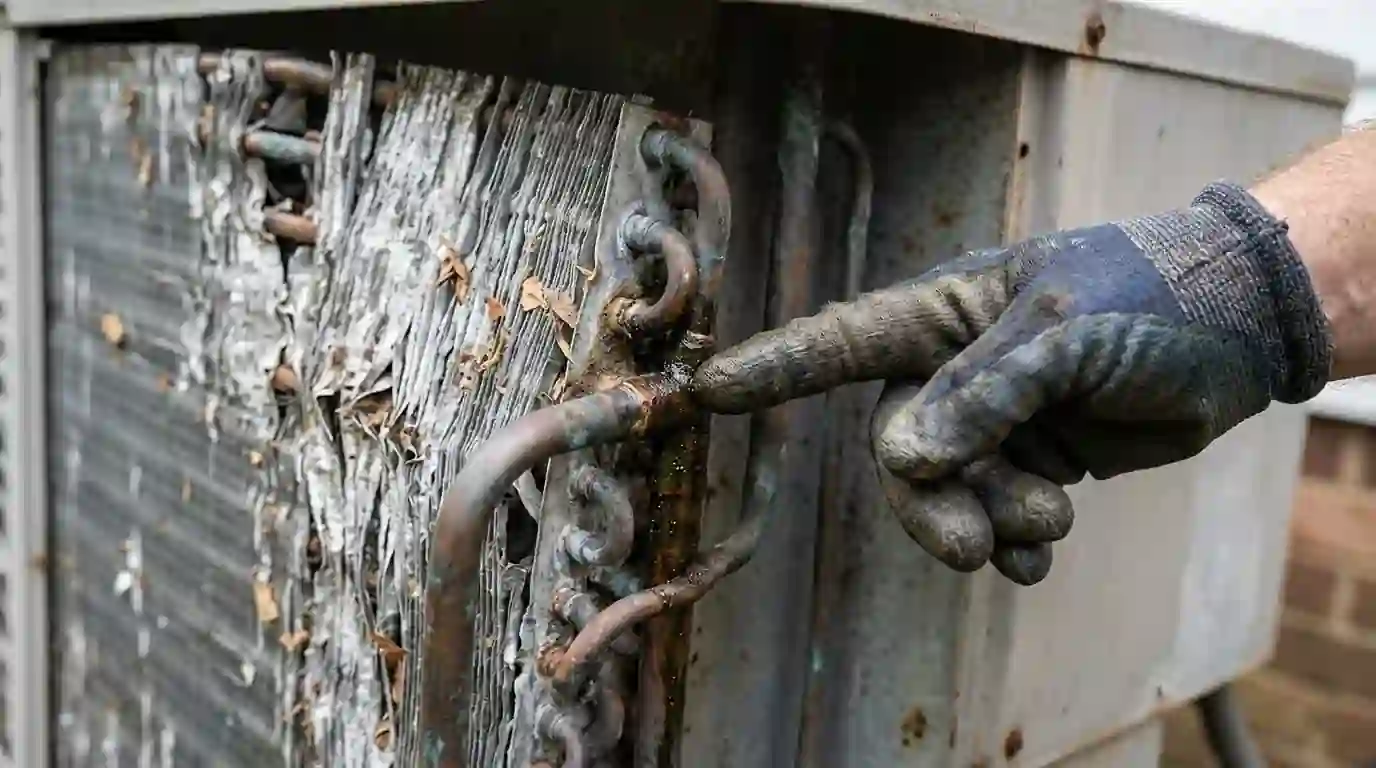
The rule leaves out things that matter, such as how comfortable the house is and how often the system has needed help lately. Use it to open the conversation, then add the factors below.
What SEER2 and newer refrigerants change
New central air systems in the Southeast have had to meet SEER2 minimums since January 2023. For most split air conditioners under 45,000 Btu/h, that floor is 14.3 SEER2. A system from the mid 2000s was built to much lower standards, and it has lost some efficiency with age.
Lower power bills rarely pay for a new system quickly on their own, but they help. The bigger gains often come from fixing old problems at the same time. That means correct sizing from a Manual J load calculation, sealed ducts and a coil matched to the outdoor unit. A replacement that copies an oversized old unit just repeats its short cycling and clammy rooms.
New residential split systems now use A2L refrigerants such as R-454B or R-32, and R-410A systems are no longer installed new. New equipment comes with a manufacturer parts warranty, which we help you register.
Signs that point toward replacement
- The system uses R-22 and needs refrigerant or a major part.
- It has needed a repair every summer for the last few years.
- Rooms stay humid or uneven even when the system is running normally.
- The compressor or indoor coil has failed on a system over 12 years old.
- Power bills keep climbing with no change in how you use the house.
If two or three of those apply, get a replacement price next to the repair price before you decide. When we visit, we show you both numbers and tell you plainly when a repair is not worth it.
If you choose to replace, our AC replacement work starts with a load calculation and a look at the ductwork. The size printed on the old unit is a clue, not the answer. Many Birmingham homes, especially older brick ranches with new windows and added insulation, need less capacity than they had.
Key takeaways
- Age predicts what is likely to fail next, but it never decides on its own.
- R-22 systems get expensive quickly once they need refrigerant or a major part.
- Multiply age by repair cost. A result over 5,000 means replacement deserves a serious look.
- Size a replacement with a Manual J load calculation, not by copying the old unit.
Questions readers ask
Most central air conditioners here last about 12 to 15 years. Long, humid cooling seasons work them hard. Regular tune-ups, clean filters and a clear outdoor coil help a system reach the upper end of that range, while neglect and oversizing shorten it.
Not by topping it off. Mixing refrigerants is not allowed, and the substitutes for R-22 need careful work and often change performance. On a system old enough to use R-22, the money usually goes further toward a new matched system.
As a rough starting point, yes. Heat pumps run in both seasons, so they often wear faster than a cooling-only AC. Factor in the backup heat, the refrigerant type and how the system handles winter before you decide.
Usually not. A compressor replacement costs a large share of a new system, and the coil, fan motor and controls on a 12 year old unit are still old. It can make sense on a newer system with parts coverage remaining.