Furnace tune-up in Birmingham, AL
After seven or eight months of sitting idle, a furnace has dust on its burners, a coated flame sensor and maybe a wasp nest in the vent. A fall tune-up cleans and tests it before the first cold snap.
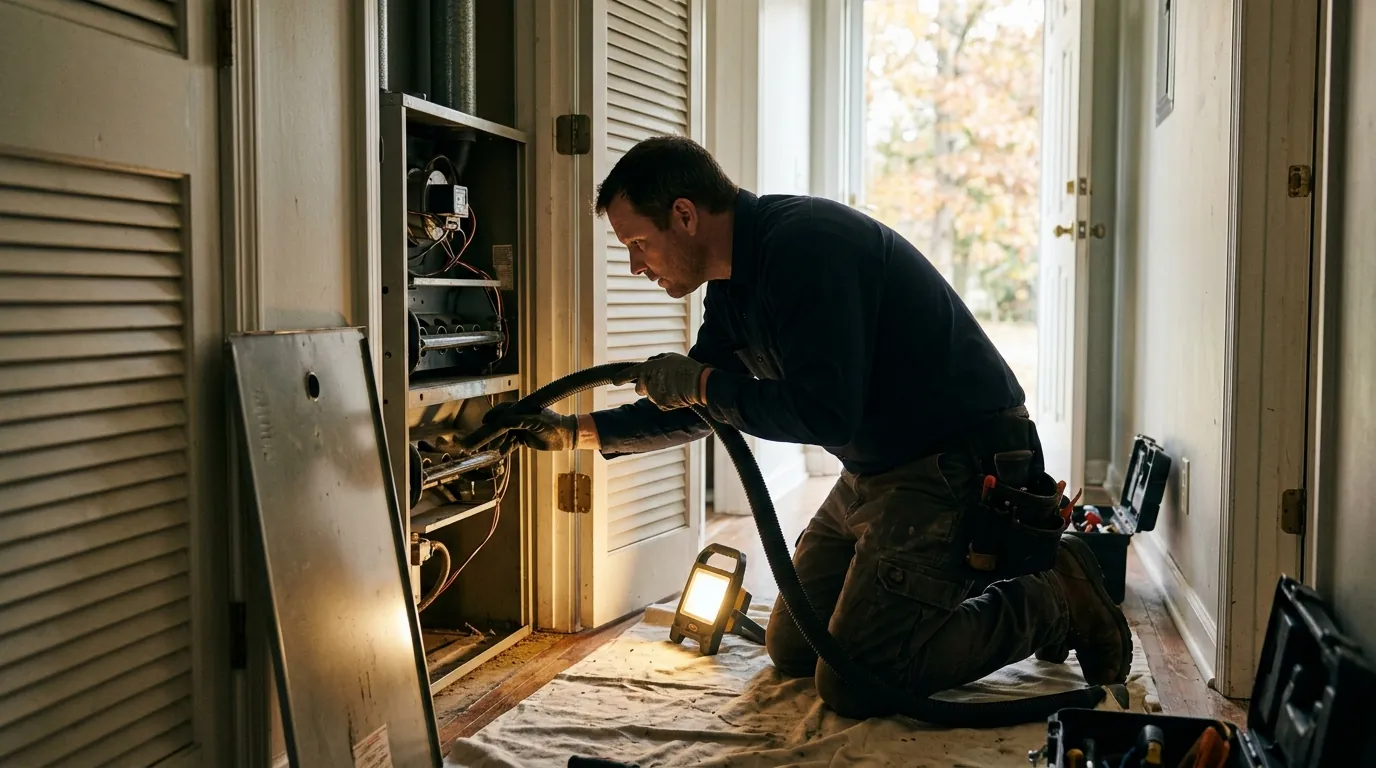
A furnace tune-up from Zeltman Heating & Air cleans the burners and flame sensor, tests the igniter, checks gas pressure, inspects the flue and vent terminal, tests the limit and rollout switches and measures carbon monoxide. On condensing furnaces we flush the trap and drain. October and early November, before the first freeze, is the ideal time to book.
Why a fall furnace tune-up pays off in a mild-winter city
In Birmingham a gas furnace may sit untouched from March to November. Dust settles on the burners, spiders build in the burner tubes and the flame sensor picks up a light coating. None of that shows until the first cold morning, when the furnace clicks, lights for a moment and shuts down.
A tune-up in October or early November catches those problems while the weather still gives you some slack. It also checks the parts that matter most for safety. A gas furnace burns fuel inside your home, so the venting, the heat exchanger and the carbon monoxide reading deserve a look every year.
Our fall visit covers the burner and ignition side, gas pressure, airflow and the safety switches that shut the furnace down when something goes wrong. We also look over the heat exchanger with a light. If anything looks suspect, we'll recommend a full camera heat exchanger and CO check instead of guessing.
If your home has a heat pump with gas backup, the tune-up covers both sides of that dual fuel setup. Electric furnaces get a different check, focused on heat strips, sequencers and wiring. Either way, you get the readings in writing, along with a plain note on any part that looks close to failing. Between visits, changing the filter every one to three months keeps the blower and heat exchanger from working harder than they should.
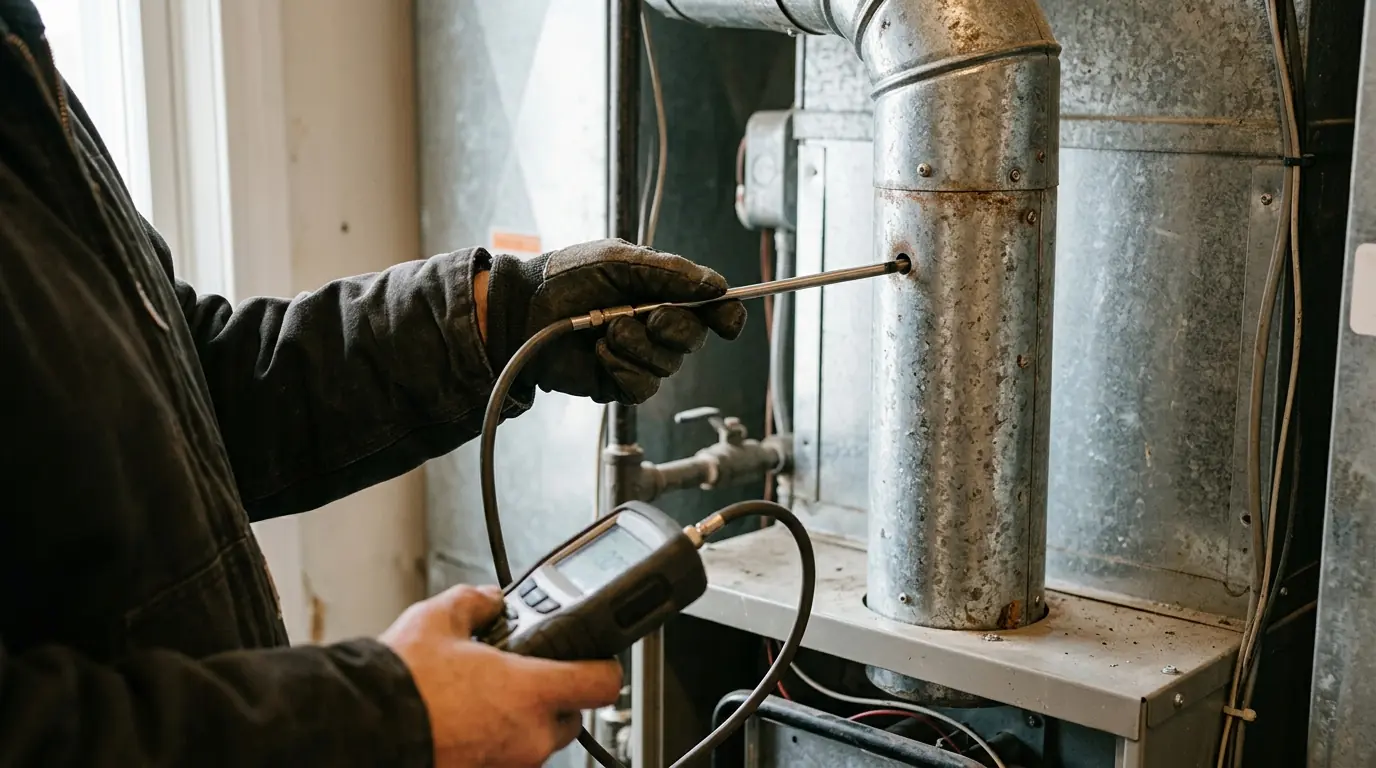
What a furnace tune-up covers
- Burners cleaned and inspected for rust, debris and an even flame
- Flame sensor cleaned and its microamp signal measured
- Hot surface igniter resistance checked against spec
- Gas pressure measured and adjusted at the valve
- Flue pipe, vent terminal and draft checked for blockage and separation
- High limit, rollout and pressure switches tested
- Blower wheel, motor amps, filter and temperature rise
- Carbon monoxide reading in the flue and a visual heat exchanger check
What a fall furnace tune-up prevents
A no-heat call on the first cold night
A dirty flame sensor or weak igniter is the classic first-freeze failure. Cleaning and testing them in October avoids most of those calls.
Carbon monoxide risk
A blocked flue, a cracked heat exchanger or poor combustion can produce CO. A yearly combustion test and vent check catch those early.
Blocked vents from summer nests
Birds, wasps and mud daubers like vent terminals and PVC pipes. Clearing them keeps the pressure switch closing and the gases moving out.
Overheating and limit trips
A clogged filter or dusty blower wheel makes the furnace run hot. Cleaning restores airflow and keeps the limit switch from shutting it down.
Wasted gas on mild days
Correct gas pressure and clean burners let the furnace heat efficiently across a long season of short heating cycles.
Condensate drain clogs
Condensing furnaces make water. A flushed trap and a clear drain keep a cold snap from shutting the furnace off.
How a fall furnace tune-up visit goes
Book before the first freeze
Call in October or early November. If you have a furnace and an AC, we can also put you on a spring and fall schedule.
Look and listen first
The technician runs a heat cycle before touching anything, watching ignition, flame and blower behavior.
Clean and adjust
Burners, flame sensor, blower and drain get cleaned, gas pressure is set and loose connections are tightened.
Test the safety side
Limit, rollout and pressure switches are tested, CO is measured and the flue and vent terminal are checked.
Your written results
You get the readings and a short list of anything that needs attention, with prices, and you decide what happens next.
What a furnace tune-up costs in Birmingham
$92 to $176
Most single-furnace tune-ups fall in this range. A second furnace, an attic unit, a condensing furnace with a stubborn drain or a heavily dusted blower can move it up. Repairs the tune-up uncovers are priced separately, and you approve them first.
Ask for a price (659) 777-4129What moves the number
- Furnace type
- Condensing furnaces have a trap, drain and extra sensors to service, so they take longer than standard furnaces.
- Number of units
- Two-story homes with two furnaces need both checked, though they share one visit.
- Access
- A horizontal attic furnace or a crawlspace unit takes more time than a closet furnace.
- Condition
- A blower wheel packed with dust or a burner tray full of debris takes extra cleaning.
- Combined visits
- Pairing it with an AC or heat pump check under a maintenance plan keeps both seasons on schedule.
Fall furnace care across Birmingham neighborhoods
Many gas furnaces in Forest Park, where historic homes sit on wooded hillside lots, still vent through original chimneys. Those flues collect leaves and debris over the summer, so the draft check matters more there. We also confirm the vent connector slopes upward and its joints are screwed tight. In the ranches of Huffman and East Pinson Valley, gas furnaces and heat pumps both turn up often on our fall schedule.
Two-story homes in Trussville, Chelsea and Hoover often have an attic furnace serving the upstairs. Attic units see big temperature swings, so we look closely at the drain, the vent connections and any rodent damage to wiring. Carrier, Bryant and Goodman furnaces are among the most common we service, and we work on most other makes.
Areas we cover most often
We repair and replace equipment from these manufacturers, plus most other makes.
Questions about furnace tune-up in Birmingham
October through early November is ideal. The weather is still mild, schedules are open, and the furnace gets checked before the first night in the 20s. If you miss that window, a tune-up in December or January still helps.
Yes. We measure CO in the flue, check draft and inspect the vent and the visible parts of the heat exchanger. If something looks suspect, we recommend a full camera inspection. A tune-up doesn't replace working CO alarms in the home.
A faint dusty smell on the first few heat cycles of the season is normal as dust burns off the heat exchanger, and it should fade within a day. A strong electrical smell is not normal, so call us. If it smells like gas, leave and call Spire or 911.
Plan on roughly an hour for a standard closet furnace. Condensing furnaces, attic units or a very dusty blower can add time. If you also have an AC or heat pump checked on the same visit, plan for a little longer.
Yes, though the visit looks different. With no burners or venting, we focus on the heat strip elements, sequencers, wiring connections, blower and filter. Loose high-voltage connections are the main thing to catch before winter.
Yes. A new furnace still collects dust, its flame sensor still coats and its vent can still get blocked by nests. Annual service records can also help if you ever need to file a manufacturer parts warranty claim.
Related services and reading
- Furnace RepairNo heat, clicking with no flame, a tripped limit or a blower that runs nonstop.
- Heat Exchanger and CO Safety CheckA camera and combustion check for cracks, rollout and carbon monoxide risk.
- HVAC Maintenance PlanSpring and fall visits on a schedule, so nothing gets skipped.
- AC Tune-UpSpring service that cleans, measures and tightens before the first heat wave.
- What a fall furnace tune-up actually checksHeating guide
- Thermostat settings for Alabama summers and wintersComfort guide
Need furnace tune-up in Birmingham?
We answer 24/7. Tell us what the system is doing and we will tell you what happens next.