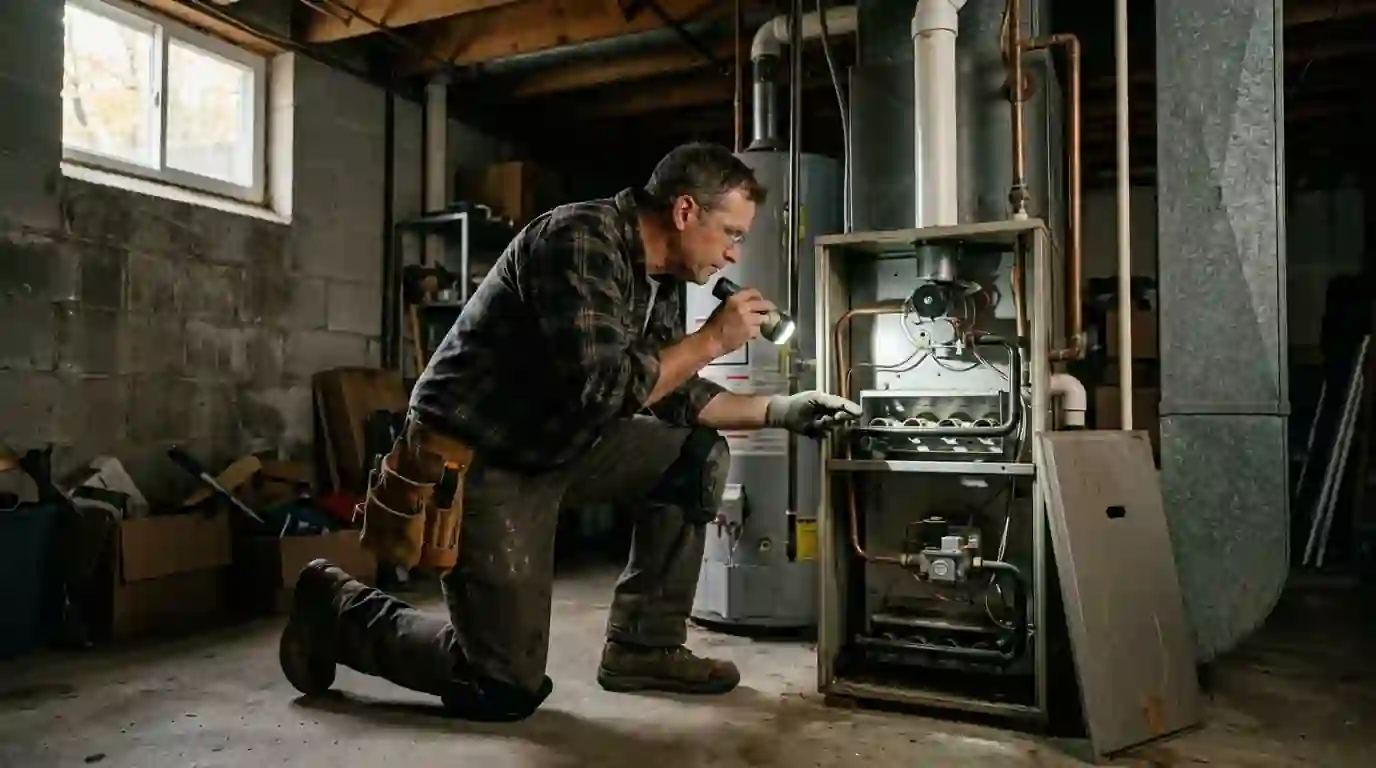
Why a fall tune-up matters before the first cold snap
Most Birmingham furnaces sit idle for half the year. Then the first cold front drops overnight lows into the 20s, and every furnace in the metro fires at once. Parts that dried out, corroded or collected dust over the summer all get tested on the same night.
A furnace tune-up moves that test to a calm weekday in September or October. The technician runs the furnace through full cycles, measures what it is doing and fixes small problems while they are still small. It is also the one visit each year where someone looks closely at the parts that keep carbon monoxide out of your house.
This guide walks through what a thorough tune-up covers, in roughly the order we work. If a visit lasts fifteen minutes and ends without a single reading, you did not get a tune-up.
The ignition and burner checks that prevent no-heat calls
Every gas furnace starts the same way. The inducer motor clears the heat exchanger, and a pressure switch confirms the draft. Then the igniter heats up, the gas valve opens and the flame sensor proves there is flame. If any step fails, the control board shuts the gas off, tries again and eventually locks out.
Burners and flame pattern
We inspect the burners for rust, debris and spider webs, which are common after a long Southern summer. A healthy flame is mostly blue and sits steady on the burner. Yellow, lazy or lifting flames point to dirt, poor combustion air or a gas pressure problem.
Flame sensor and igniter
The flame sensor is a thin metal rod that builds up a light coating over time. When it can no longer prove flame, the furnace lights for a few seconds and shuts off. We clean it, measure its signal in microamps and check the igniter for cracks and correct resistance. Hot surface igniters are brittle, and they often fail on the first cold morning of the year.
Inducer motor and pressure switch
The inducer is the small fan that pulls combustion gases through the furnace and out the flue. We listen for worn bearings and measure its amp draw. We also check the pressure switch, its rubber tubing and the ports, which can clog with rust or water and cause a no-heat call that looks like a bigger failure.
Venting, the heat exchanger and carbon monoxide
This is the part of the tune-up that matters most for safety. A furnace makes heat by burning gas inside a sealed metal heat exchanger, and the exhaust leaves through the flue. If the heat exchanger cracks or the flue is blocked, exhaust containing carbon monoxide can end up in the air you breathe.
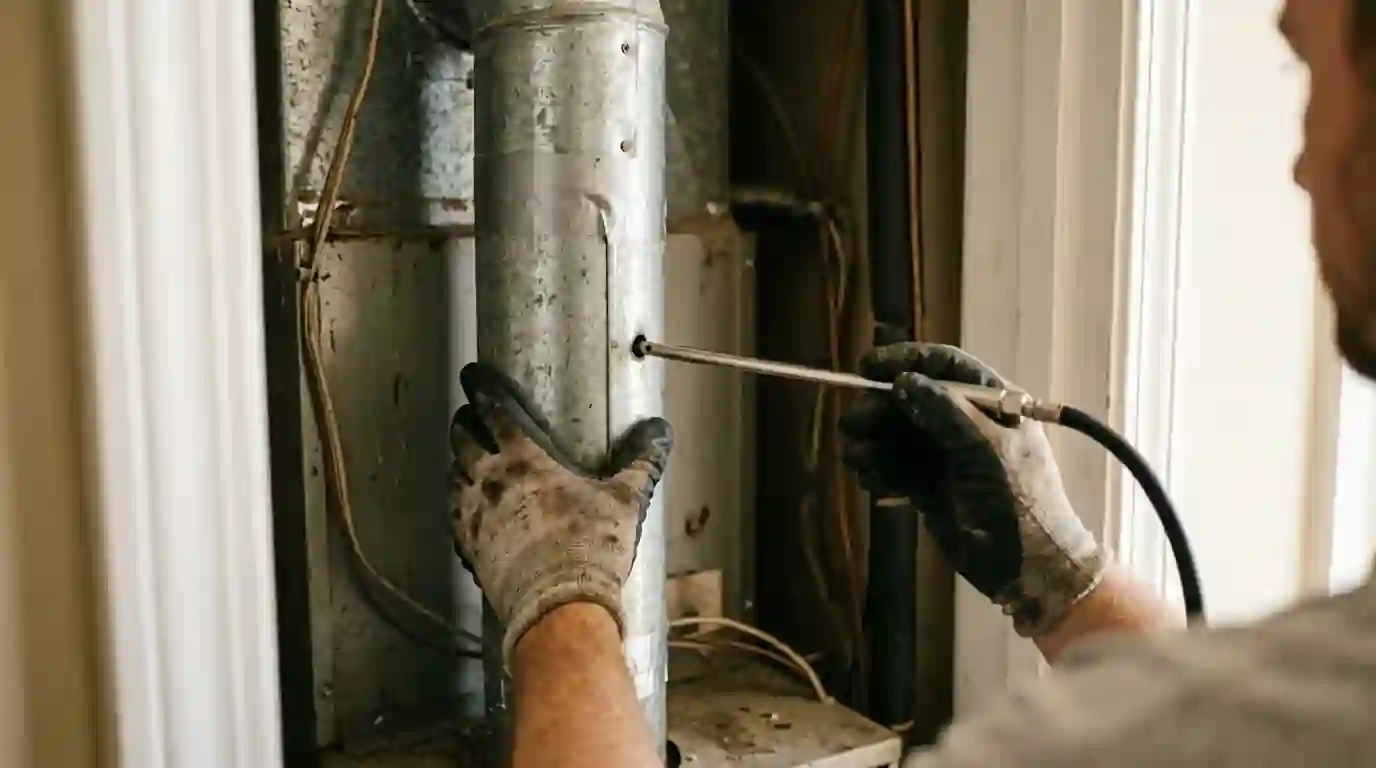
- Flue pipe: we check every joint, the slope back toward the furnace and the screws that hold each section together.
- Chimney or vent termination: older homes in Forest Park and other early 1900s neighborhoods often vent into masonry chimneys that may need a liner, and PVC vents on newer furnaces can be blocked by leaves or nests.
- Heat exchanger: we look for cracks, rust-through and soot with a light and, when access allows, a camera.
- Combustion test: an analyzer reads carbon monoxide and oxygen in the flue gas, which shows how cleanly the burners are running.
- Room CO reading: we check the air around the furnace and in the living space.
- Safety switches: high limit and flame rollout switches are tested so the furnace shuts down if it overheats or flames escape.
If we find a crack or a venting failure that lets exhaust into the house, we shut the furnace down and explain why. That is not a sales tactic, it is the only safe answer. For a deeper look, a dedicated heat exchanger and CO safety check goes further than a standard tune-up.
Gas pressure, airflow and temperature rise
A furnace is built to burn a specific amount of gas. We attach a manometer to the gas valve and compare the manifold pressure to the furnace specification. Pressure that runs low wastes fuel and can let condensation form inside the heat exchanger. Pressure that runs high overheats the metal and shortens its life.
Airflow comes next. We pull the blower assembly when it is accessible, clean the wheel if it is caked with dust and check the motor amp draw and capacitor. Then we measure the air going into the furnace and the air coming out. That difference, called temperature rise, should fall inside the range printed on the furnace label.
A temperature rise that runs too high usually means restricted airflow from a dirty filter, a clogged coil or undersized returns. It trips the high limit, makes the furnace cycle on and off, and cooks the heat exchanger over time. It is one of the most useful numbers a technician can give you.
Filter, thermostat and the high-efficiency extras
We check the filter and replace it if you have one on hand, then look at the return for gaps that pull in attic or crawlspace air. At the thermostat, we confirm it calls for heat correctly and that the furnace shuts off when the call ends. A thermostat configured for the wrong type of equipment causes more odd heating problems than people expect.
High-efficiency furnaces, the ones with white PVC vent pipes, make water as they run. We clear the condensate trap and drain and check the hoses that run to the pressure switch. A clogged trap is a very common cause of a lockout on the first cold night, and it takes only minutes to clear during a tune-up.
What you can do before we arrive, and what a tune-up costs
Some prep is safe and useful for any homeowner. None of it involves the gas valve, the burner compartment or the electrical panel, which should stay closed.
- Replace the filter, and write the size on the side of the furnace for next time.
- Clear storage away from the furnace closet so the burners get enough combustion air.
- Test your carbon monoxide alarms and replace any past their date. Every home with gas appliances should have them.
- Switch the thermostat to heat and raise it a few degrees to see that the furnace responds.
- Check that outdoor PVC vent pipes are clear of leaves, mulch and nests.
The first run of the season often smells like burning dust for a few minutes. That is normal. A smell that lingers, a rotten egg odor or a sounding CO alarm is not, so leave the house and call Spire or 911 first, then us.
Most standalone furnace tune-ups in the Birmingham area run about $119 to $218, depending on the furnace type, access and whether it is paired with a heat pump. Parts found during the visit are priced separately, and you get that price before any work starts. A maintenance plan pairs the fall furnace visit with a spring AC visit so neither one gets skipped.
Key takeaways
- A real tune-up includes readings: gas pressure, temperature rise, flame signal and a combustion test.
- The heat exchanger and flue checks are the safety core of the visit.
- Dirty flame sensors and clogged condensate traps cause many first-cold-night lockouts.
- Change the filter and test your CO alarms before the heating season starts.
Questions readers ask
Plan on about an hour to an hour and a half for a single gas furnace with normal access. Attic furnaces, crawlspace units and dual fuel systems take longer, and so does a furnace that has gone several years without service and needs a full cleaning.
Yes, for a few minutes. Dust settles on the heat exchanger over the summer and burns off on the first run. If the smell lasts more than an hour, smells like gas or rotten eggs, or a CO alarm sounds, leave the house and call the gas company or 911.
It should. Our fall tune-up includes a combustion reading at the flue and a CO check in the air around the furnace and the living space. If either reading is high, we find the cause, and we will shut the furnace down if exhaust is reaching the house.
September and October work well. The weather is still mild, schedules are open, and any parts we need can arrive before the first cold front. A tune-up in late November still helps, but by then you may be waiting behind a wave of no-heat calls.