Air filtration upgrades in Birmingham, AL
A higher MERV filter catches more pollen and dust, but forcing a dense 1-inch filter into a small slot can starve the system of air. We upgrade filtration with the right cabinet and size, so you get cleaner air without the airflow penalty.
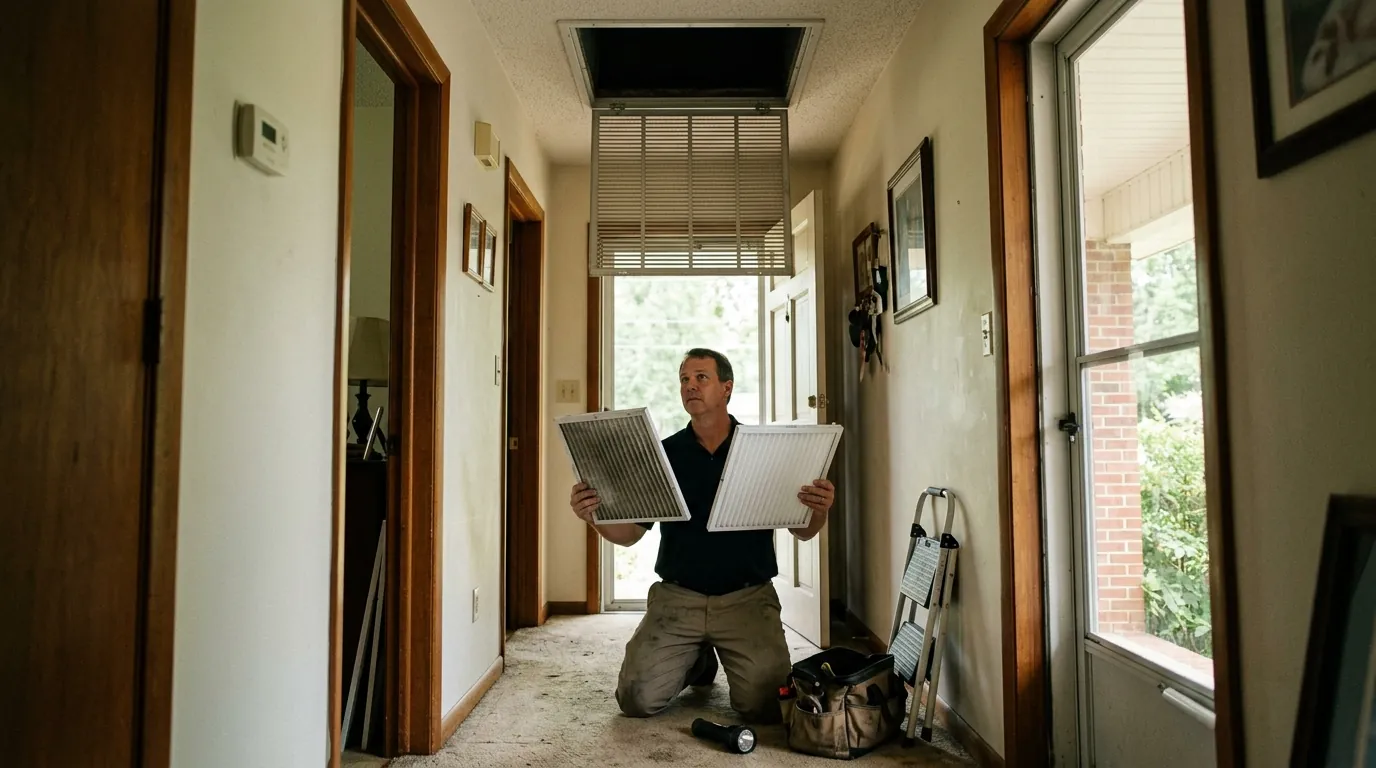
MERV numbers describe how well a filter catches particles of different sizes. Higher numbers catch more, but they also resist airflow more, and a thin, dense filter can push static pressure too high. Zeltman Heating & Air measures your system, then recommends a filter or a 4 to 5 inch media cabinet that captures more without choking the blower.
MERV numbers, static pressure and why deeper filters win
MERV runs from 1 to 16 on residential filters, and each step up catches a larger share of smaller particles. A basic fiberglass filter mostly protects the blower from big debris. A MERV 8 pleated filter catches most pollen and household dust. MERV 11 and 13 catch finer particles, including much of the smoke and fine dust that lower grades let through.
The catch is resistance. A denser filter takes more pressure to push air through, and every system has a limit. Most residential blowers are designed around roughly half an inch of water column in total external static pressure. A dense 1-inch filter in an undersized return can use up much of that budget by itself, leaving less for the coil and ducts.
When static pressure climbs, airflow drops. A cooling coil starved of air runs colder and can freeze. A variable-speed blower ramps up to compensate and uses more power. A furnace heat exchanger runs hotter. None of that shows up as a warning light on the thermostat, which is why we measure pressure instead of assuming a filter fits.
Surface area solves most of it. A 4 or 5 inch media cabinet holds a deep pleated filter with many times the surface of a 1-inch filter, so it can reach MERV 11 or 13 with less resistance. Those filters also last longer, often six months to a year, depending on pets, renovation dust and how heavy the pollen season runs.
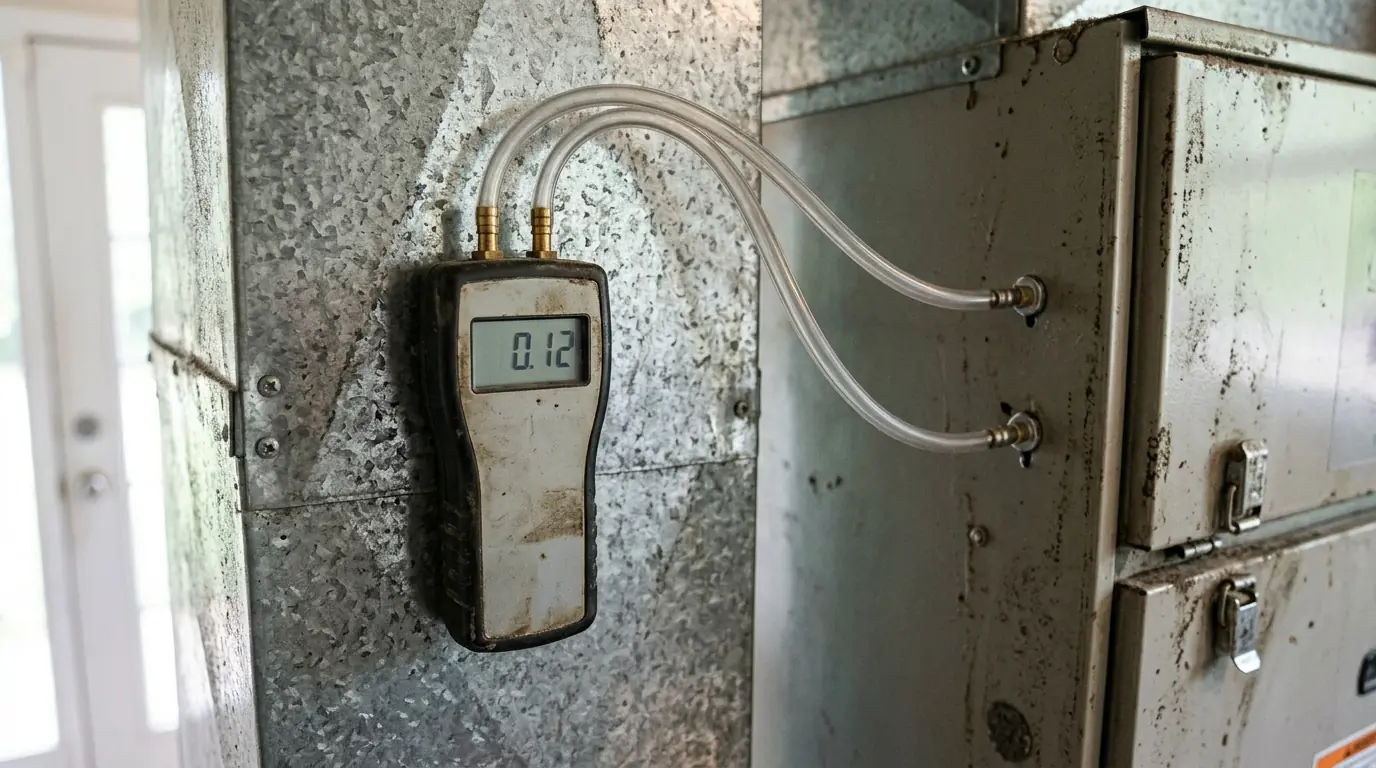
What we measure before upgrading your filtration
- Total external static pressure with the current filter in place
- Pressure drop across the filter alone, clean and loaded
- Return grille and duct size compared with the blower airflow
- Filter location: at the air handler, in a ceiling grille or both
- Bypass gaps around the filter where dirty air sneaks past
- Space at the air handler for a 4 or 5 inch media cabinet
- Blower type and speed settings for single, multi or variable speed
- Coil face for buildup that the filters have been missing
What air filtration upgrades cost in Birmingham
$335 to $1,185
A larger return filter grille or a better filter setup sits near the low end. A 4 or 5 inch media cabinet installed at the air handler, with return modifications and sealing, sits higher. Replacement media filters are an ongoing cost, usually one to two times a year. Your price comes after the static pressure readings, ahead of any installation.
Ask for a price (659) 777-4129What moves the number
- Cabinet size and type
- A 4 inch cabinet and a 5 inch cabinet differ in price, and some systems need a specific size to fit.
- Return modifications
- Fitting a cabinet in a tight closet or attic sometimes means reworking the return plenum.
- Upstairs and downstairs units
- Each air handler needs its own cabinet, so a house with one system per floor doubles the work.
- Filter location changes
- Moving filtration from ceiling grilles to the air handler adds a little labor but makes future changes simpler.
- MERV level chosen
- Higher MERV media costs more per filter and may need a larger cabinet to keep pressure low.
How we upgrade a filtration system
Measure the system
We record static pressure and filter pressure drop, so the recommendation rests on readings, not the box a filter came in.
Pick the filter and housing
Depending on space and readings, we suggest a better 1-inch filter, a larger return grille or a full media cabinet.
Install and seal
Media cabinets go in the return next to the air handler. We seal the cabinet and close gaps where air could bypass the filter.
Retire extra filter spots
If filters also sat at ceiling grilles, we remove them there, so you are not paying to filter the same air twice.
Measure again and set a schedule
A second static pressure reading confirms the upgrade did not hurt airflow, and we give you a change schedule that fits your house.
When a filtration upgrade makes sense
Filters clog in a few weeks
If a 1-inch filter turns gray in a few weeks, the system needs more surface area, not more frequent swaps of the same filter.
Dust settles fast after cleaning
Fine dust coming back quickly means the current filter is letting smaller particles slip through.
Spring pollen gets inside
A MERV 8 or higher filter in a proper cabinet traps much more of the March and April pollen circulating indoors.
A high MERV filter made the house warmer
A dense filter in a thin slot can cut airflow enough to hurt cooling. That is a sign the filter needs a bigger home.
Pets and shedding
Dander and hair load filters quickly. A deeper media filter holds more before it starts restricting airflow.
Filter grilles in several ceilings
Homes with filters at several return grilles are easy to forget. A single media cabinet at the air handler is simpler to keep up with.
Filtration for Birmingham pollen, dust and older ducts
Every March and April, pine and oak pollen coat Birmingham yellow-green, and plenty of it gets pulled into return grilles. A system with a thin filter in a ceiling grille and leaky return ducts in the attic can bypass much of its own filtration. In older homes in Glen Iris, Forest Park and Highland Park, patched returns are common, so sealing the return often matters as much as the filter.
Newer two-story homes in Pelham, Helena and Hoover usually have filter grilles in the hallway ceilings and air handlers in the attic, which makes a media cabinet a clean upgrade. We work with Goodman, Rheem, Trane and the other air handlers common around the metro. Our guide to pollen season and MERV ratings covers the filter basics in more depth.
Areas we cover most often
We repair and replace equipment from these manufacturers, plus most other makes.
Questions about air filtration upgrades in Birmingham
For most homes, MERV 8 to 11 in a properly sized slot works well. MERV 13 catches more fine particles but needs a media cabinet or a large return to avoid choking airflow. We measure static pressure and recommend the highest level your system can handle comfortably.
A filter that is too dense for the return size can restrict airflow, freeze an AC coil, overheat a furnace and make a variable-speed blower work harder. A deeper media filter avoids most of that because its larger surface area resists airflow far less.
Most 4 to 5 inch media filters last six months to a year. Pets, renovation dust and a heavy pollen spring shorten that. We check the filter during maintenance visits and tell you what interval fits your house.
Usually, yes. A media cabinet catches more fine particles at lower resistance and needs fewer changes. Over a few years, the filter savings and better airflow make up much of the install cost.
If both systems serve living space, yes. Each air handler pulls air from its own part of the house, so upgrading one leaves the other floor with basic filtration and its own share of dust.
Better filtration captures more pollen, dust and dander from the air passing through the system. We cannot make medical claims, but many people notice less dust on surfaces. Talk with your doctor about allergy treatment itself.
Related services and reading
- Air Purifier and UV Light InstallationIn-duct UV lights and air cleaners that work every time the blower runs.
- Indoor Air Quality TestingHumidity, particle and airflow readings that show what is actually in the air.
- Duct CleaningSource-removal cleaning after renovations, pests or years of dust and pollen.
- Hot and Cold Room FixesAirflow testing and balancing for rooms that never match the thermostat.
- Pollen season and your HVAC filter: MERV ratings explainedAir quality guide
Need air filtration upgrades in Birmingham?
We answer 24/7. Tell us what the system is doing and we will tell you what happens next.