Hot and cold room fixes in Birmingham, AL
If one bedroom feels like a sauna in July and the den stays chilly in January, the problem is usually how air reaches each room. We measure it room by room and fix what is actually restricting it.
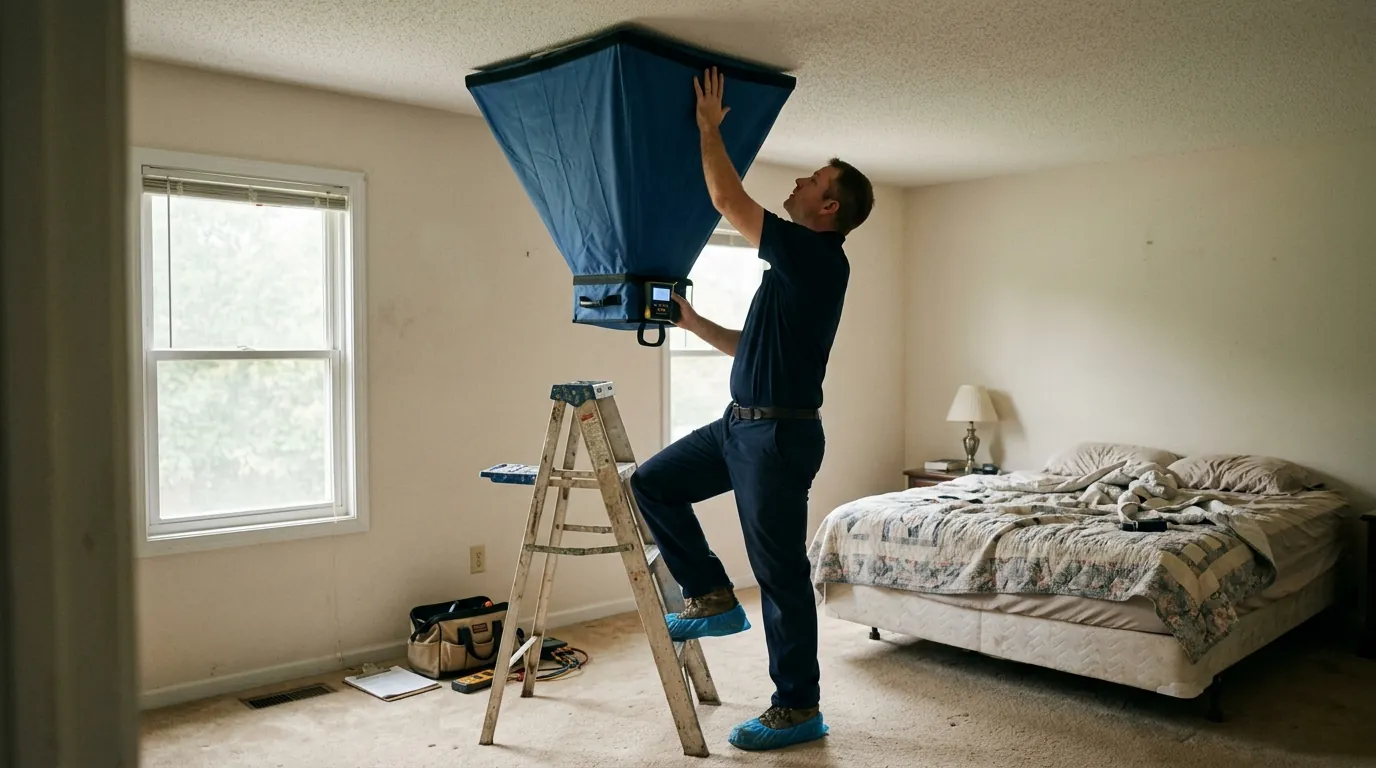
Hot and cold rooms almost always trace back to airflow: too little air reaching a room, no path for air to get back to the return, or a crushed or disconnected duct along the way. Zeltman Heating & Air measures airflow at the registers, checks static pressure and room temperatures, then corrects the cause with duct repairs, added returns or balancing dampers.
Why some rooms never match the thermostat
The thermostat only knows the temperature where it hangs. Every other room depends on how much conditioned air reaches it and how easily that air can get back to the system. Some rooms sit far from the air handler, over a garage or behind big west windows. In those rooms, small duct problems show up as big temperature swings.
Closing registers in the rooms that feel fine is the fix most people try first, and it rarely works. A closed register raises pressure in the duct system instead of pushing air somewhere useful. The blower works harder, the noise goes up, and the far rooms often get only a little more air than before.
Return air is the piece most people never think about. A bedroom with the door shut and no return of its own gets pressurized. Its supply register can then push in only as much air as leaks out under the door. A transfer grille, a jumper duct or a dedicated return lets that room breathe, and the supply air finally arrives at full strength.
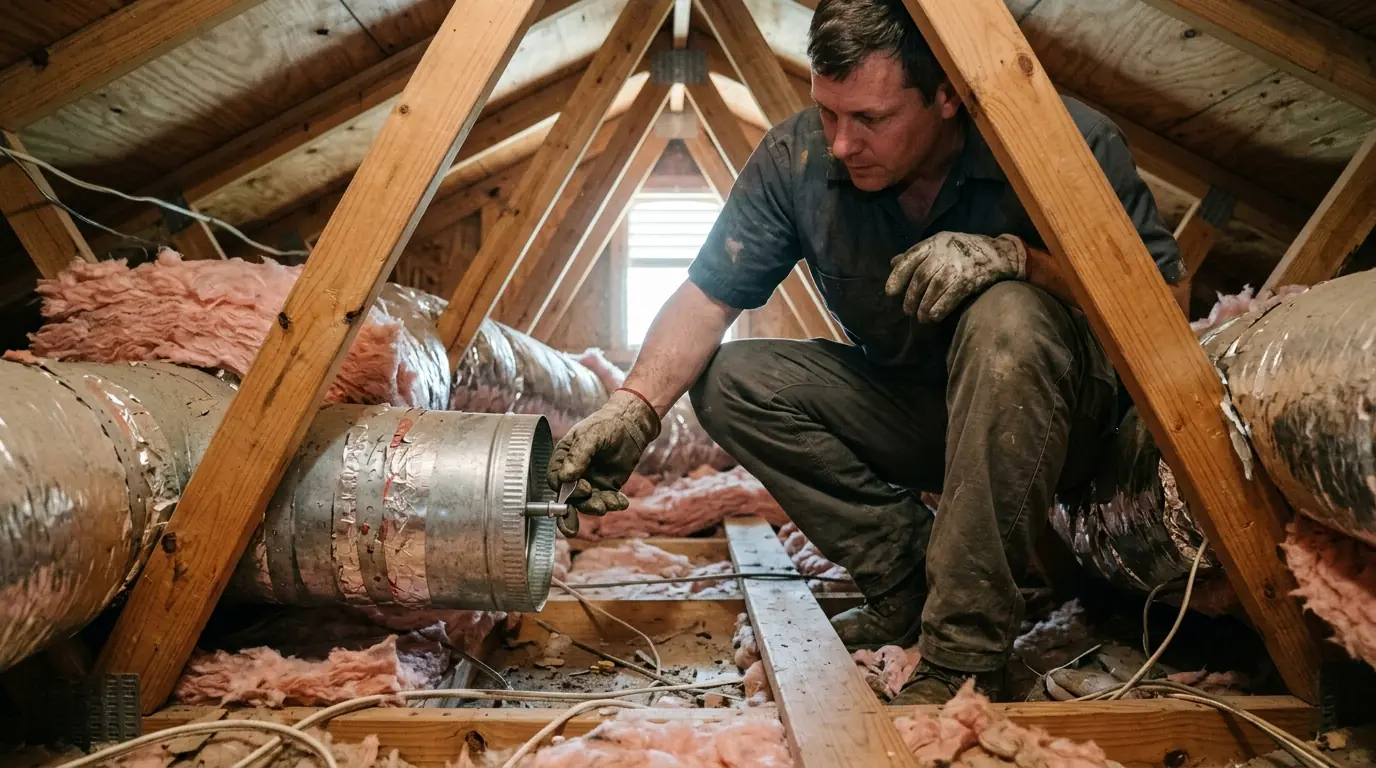
Then there are the restrictions you cannot see from the hallway. Think of a flex run crushed under stored boxes or a long sagging duct. A branch may have slipped off its boot years ago, or a takeoff may have no balancing damper at all. We find those by measuring airflow at each register and comparing it with what the room needs, rather than guessing from the thermostat.
What we measure on a hot and cold room visit
- Airflow at each supply register with a capture hood, recorded room by room
- Total external static pressure and the pressure drop across the filter and coil
- Room temperatures compared with the thermostat at the same time of day
- Return paths for each closed bedroom, including door undercuts and transfer grilles
- Duct runs in the attic or crawlspace for crushing, kinks, sags and disconnections
- Balancing dampers at the trunk takeoffs, or the lack of them
- Blower speed settings compared with what the equipment and ducts call for
- Window exposure and insulation gaps that add load to the problem rooms
What hot and cold room fixes cost in Birmingham
$215 to $1,890
A visit that ends with a blower speed change or one repaired flex run sits near the low end. Adding returns, installing balancing dampers on several branches or rerouting a long duct to a bonus room costs more. We measure first, then price the fix for your approval.
Ask for a price (659) 777-4129What moves the number
- How many rooms are affected
- One room usually means one duct run. Several rooms point to a system-wide issue like undersized returns or high static pressure.
- Return air changes
- Cutting in a new return or jumper duct takes more labor than adjusting a damper, especially through finished ceilings.
- Duct access
- Runs in a walkable attic are quicker to fix than ducts in floor cavities, low crawlspaces or tight knee walls.
- Damper installation
- Adding manual balancing dampers to several takeoffs is a moderate job, since each one needs a sealed install and a marked setting.
- Larger corrections
- If the readings show the trunk is simply too small, the right fix may be partial duct replacement or zoning.
How we track down and fix a problem room
Tell us which rooms and when
The time of day and season a room misbehaves narrows the cause. Afternoon heat upstairs and morning cold in a back bedroom point in different directions.
Measure the whole system
We record airflow at every register and static pressure at the equipment, so we can see where air is going and where it is getting lost.
Find the restriction
We walk the duct runs serving the problem rooms, looking for crushed flex, loose connections, undersized branches and missing returns.
Fix the cause
Repairs might mean straightening and supporting flex, adding a return or jumper duct, installing balancing dampers or adjusting blower speed.
Measure again
After the changes we take a second set of readings, so you see the before and after airflow for the rooms that were struggling.
Signs your house has an airflow problem, not an equipment problem
One room is always the odd one out
A single room that runs several degrees off the rest usually points to its duct run, its return path or its sun exposure, not the outdoor unit.
Weak air from far registers
If you can barely feel air at the end of the hall while the register near the air handler blows hard, the system is out of balance.
Doors slam or whistle when the system starts
Pressure differences between closed rooms and the hallway mean those rooms have no good path back to the return.
Upstairs hot in summer, downstairs cold in winter
Seasonal swings between floors are classic two-story airflow problems that balancing or zoning can address.
A room was added or finished
Bonus rooms, sunrooms and finished basements tied onto an existing trunk often get whatever air happens to be left over.
Dark streaks at baseboards or carpet edges
Dirty lines around grilles and along carpet edges often mark pressure imbalances pulling dusty air through small gaps.
Hot and cold rooms in Birmingham-area houses
Bonus rooms over garages in Hoover, Helena and Pelham subdivisions are the problem rooms we see most. They sit at the end of a long run, have exposed walls on several sides and often share a small return with the hallway. In older homes in Mountain Brook and Homewood, the trouble spot is usually an addition that was tied onto the original trunk decades later.
Split-level and hillside houses in Vestavia Hills bring their own puzzle, since ducts squeeze through tight crawlspaces and low attics. We work out of our base on 15th Avenue North and cover the whole metro. When we can, we book measuring visits for late afternoon, when hot rooms are at their worst. If balancing alone will not close the gap, we will say so and talk through zoning or a ductless option.
Areas we cover most often
We repair and replace equipment from these manufacturers, plus most other makes.
Questions about hot and cold room fixes in Birmingham
Usually the room is not getting enough air, has no return path when the door is shut, or sits at the end of a crushed or leaky duct run. Sun exposure adds to it. Measuring airflow at the register shows which one it is, and the fix follows from that.
Closing a few registers seldom fixes a problem room. It raises duct pressure, adds noise and often moves very little extra air to the far rooms. Closing too many can freeze the coil in summer. Balancing dampers at the takeoffs are the proper way to redirect air.
Measuring a typical single-system home takes about two hours. Simple corrections can happen on the same visit. Larger fixes, such as cutting in a new return, get scheduled after you approve the price.
They help, and sometimes they are enough. Balancing can shift more air upstairs in summer and more downstairs in winter. When the gap between floors stays large after balancing, zoning or a second system is the stronger answer.
Rarely. A bigger unit pushes air through the same restricted ducts, so the problem rooms stay behind while the rest of the house gets colder and clammier. Fixing airflow first usually costs less and works better.
A jumper duct is a short duct with a grille in the bedroom ceiling and another in the hallway ceiling. It gives a closed room a path back to the central return, so supply air can actually flow in. It is a common fix for stuffy bedrooms.
Related services and reading
- HVAC ZoningDampers and zone controls so upstairs and downstairs stop fighting over one thermostat.
- Ductwork Repair and SealingDisconnected runs, crushed flex, sweating ducts and leaky joints in attics and crawlspaces.
- Ductwork ReplacementNew supply and return ductwork designed for the airflow your system actually needs.
- Ductless Mini-Split InstallationDuctless comfort for bonus rooms, sunrooms, garages and older homes with no duct space.
- Sweating, leaking, crushed: duct trouble in older homesDuctwork guide
- Why a bigger AC is not a better ACBuying guide
Need hot and cold room fixes in Birmingham?
We answer 24/7. Tell us what the system is doing and we will tell you what happens next.