Indoor air quality testing in Birmingham, AL
Before buying a purifier or a dehumidifier, it helps to know what is actually in your air. We measure humidity, particles, carbon dioxide and VOCs with meters, then explain what the numbers mean for your system.
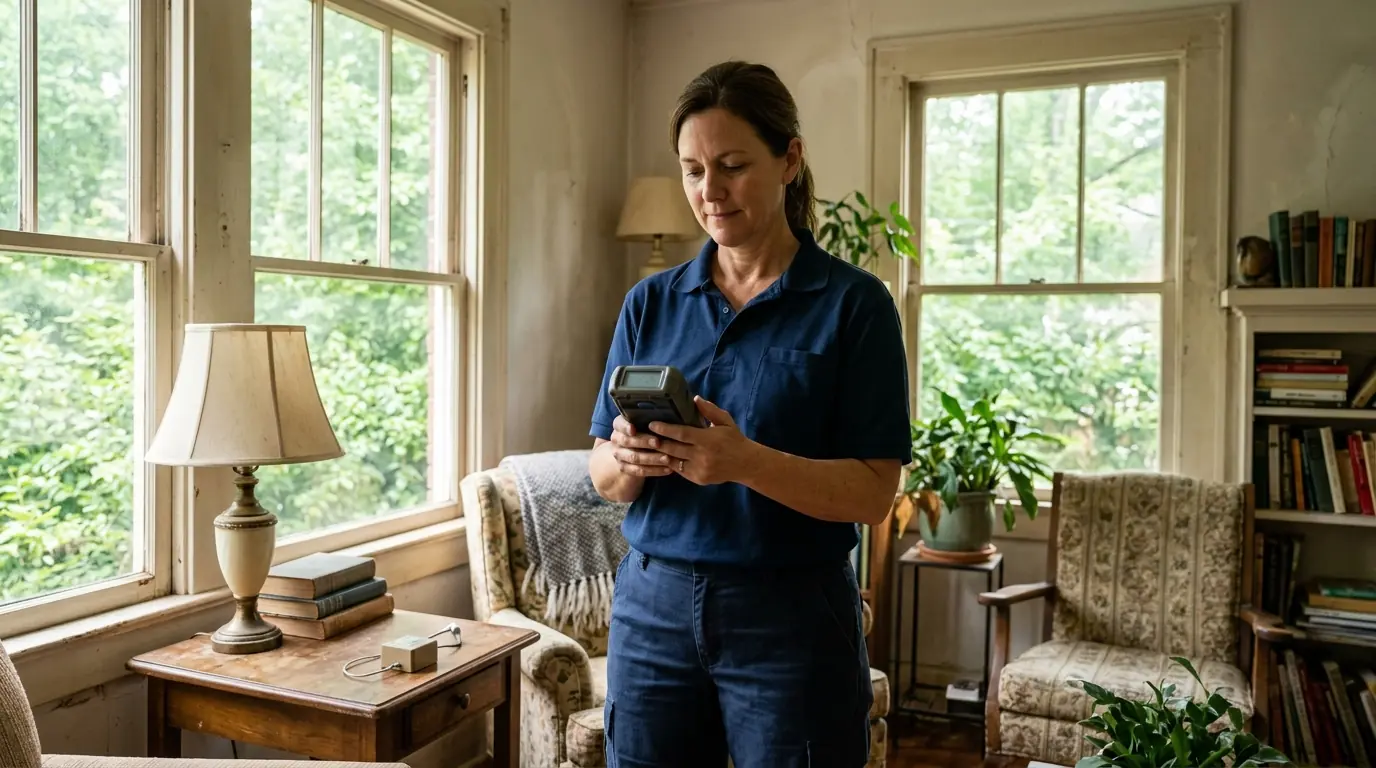
Indoor air quality testing uses meters to record humidity, temperature, fine particles, carbon dioxide and total VOCs in several rooms, plus a carbon monoxide check around gas appliances. Zeltman Heating & Air compares those readings with outdoor air and your HVAC setup, then explains which fixes would help: drying the house, better filtration, fresh air or duct sealing. We make no medical claims.
What indoor air quality testing measures, and what it does not
Air quality testing is a set of measurements, not a pitch for one product. We start with relative humidity and temperature in several rooms, because damp air drives so many of the comfort and odor complaints we hear in Birmingham. Then we count fine particles, check carbon dioxide and take a total VOC reading, comparing each one with the air outside.
Each number points to a different fix. High humidity points toward drying the house or correcting an oversized AC. High particle counts point to filtration, return leaks or a dusty crawlspace. Carbon dioxide that climbs in closed bedrooms overnight suggests the house needs more fresh air. High VOC readings usually trace back to new furniture, paint, cleaning products or stored chemicals.
A total VOC meter gives a broad reading. It tells you whether the level is higher than outdoors, not which chemical is present. Lab sampling for specific chemicals, mold spores or asbestos is a separate specialty. Our readings focus on what the heating and cooling system can actually change.
We also check carbon monoxide around gas furnaces, water heaters and ranges, and confirm you have working CO alarms. That check is about safety, not comfort. If we find a reading near a gas appliance, it moves to the top of the list ahead of everything else, and we explain what happens next.
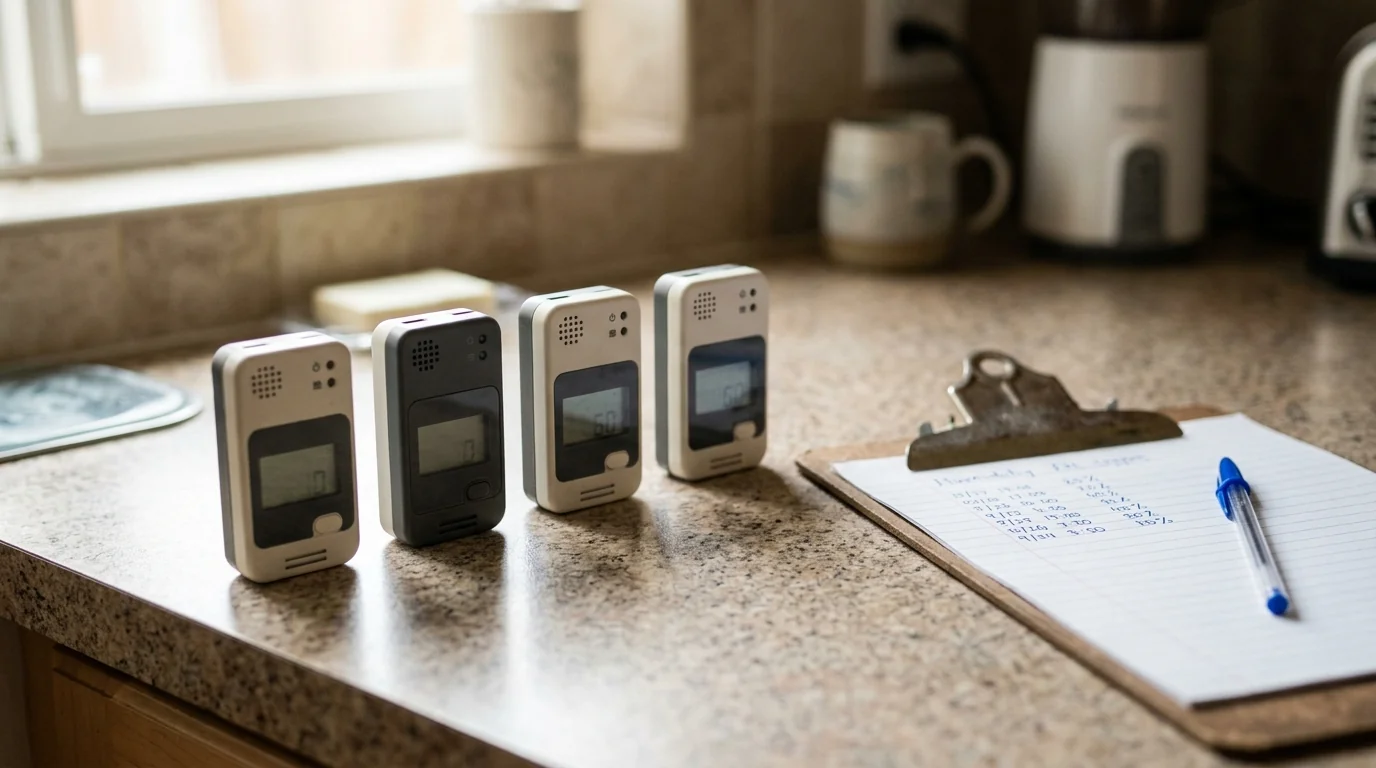
What we measure during an air quality test
- Relative humidity and temperature in each main room and outdoors
- Fine particle counts indoors compared with outdoor air
- Carbon dioxide levels, including closed bedrooms
- Total VOC readings near living areas and storage spaces
- Carbon monoxide around gas furnaces, water heaters and ranges
- Return duct leaks pulling air from the attic, garage or crawlspace
- Filter type, fit and bypass gaps at the air handler
- Crawlspace or attic moisture near the HVAC equipment
When indoor air quality testing is worth doing
Before buying an air cleaner
Readings show whether particles, humidity or stale air is the real issue, so you do not pay for a product aimed at the wrong problem.
Musty or stale smells
Odors that hang around usually mean moisture or poor ventilation. Testing narrows down which one you are dealing with.
Dust that comes back fast
Particle counts and a look at the returns show whether dirty air is getting into the ducts from the attic or crawlspace.
After sealing or renovating
A tighter house or new finishes can change humidity, VOCs and fresh air levels. Testing shows whether ventilation needs to catch up.
Rooms that feel stuffy at night
Carbon dioxide readings in closed bedrooms show whether those rooms get enough air exchange while you sleep.
Gas appliances in the home
A carbon monoxide check around furnaces and water heaters belongs in any air quality visit.
How an indoor air quality test works
Tell us what you notice
Smells, dust, stuffiness or damp rooms tell us where to focus the readings and which rooms matter most.
Take spot readings
We measure humidity, particles, carbon dioxide and VOCs in the main rooms and outdoors for comparison.
Leave loggers if useful
For humidity and carbon dioxide, a logger left for a day or two shows patterns a single reading would miss.
Inspect the system
We look at the filter, returns, ducts, coil and crawlspace, since the HVAC system moves the air through every room.
Explain the numbers
You get the readings and a plain explanation of what they mean, with options ranked from simplest to most involved.
What indoor air quality testing costs in Birmingham
$185 to $465
A one-visit test with spot readings sits near the low end. Leaving loggers for a day or more, testing two systems or adding a duct leakage check pushes the price higher. Testing is priced on its own, before any recommendation, and you get that price before we start.
Ask for a price (659) 777-4129What moves the number
- Number of rooms and systems
- A two-story home with two systems takes more readings than a single-floor ranch.
- Spot readings or loggers
- Loggers left for a day or two need a return visit to collect, which adds cost but reveals patterns.
- Added inspections
- A camera look in the ducts or a crawlspace moisture check adds time to the visit.
- Gas appliance checks
- Homes with several gas appliances take longer for carbon monoxide testing.
- Report detail
- A short summary comes with every test. A written room-by-room breakdown takes a little longer to prepare.
Air quality patterns we see around Birmingham
Humidity is the reading that stands out most often in Birmingham homes. Crawlspace houses in Huffman, Pinson and Roebuck often show damp air under the floor, while newer two-story homes in Chelsea and Helena can read high indoors because an oversized system short cycles. Pollen also spikes particle counts in March and April, especially in houses with leaky return ducts in the attic.
Older homes in Avondale, Norwood and East Lake tend to be leaky, so carbon dioxide rarely builds up there, but dust and humidity move in freely. Tight newer homes go the other way and hold in moisture and VOCs. We pair test results with fixes like a whole-house dehumidifier or fresh air ventilation only when the numbers support it. Testing visits run all over the metro, starting from our base on 15th Avenue North.
Areas we cover most often
We repair and replace equipment from these manufacturers, plus most other makes.
Questions about indoor air quality testing in Birmingham
We measure relative humidity, temperature, fine particles, carbon dioxide and total VOCs in the main rooms and outdoors. We also check carbon monoxide around gas appliances and look at the filter, returns and ducts, since they shape the air in every room.
Our testing measures humidity and finds the moisture problems that let mold grow, and we look at the coil, pan and ducts for visible growth. Identifying mold species takes lab sampling, which is a separate specialty from HVAC testing.
Spot readings and a system inspection usually take one to two hours. If loggers would help with humidity or carbon dioxide patterns, we leave them for a day or two and come back to collect them.
Our meters show humidity, particles, carbon dioxide and VOC levels compared with outdoor air, plus carbon monoxide around gas appliances. We do not make medical judgments. If you have health concerns, share the readings with your doctor.
Many air problems are really humidity or ventilation problems, which a purifier does not fix. Testing shows whether particles, moisture or stale air is the main issue, so you spend money on the fix that matches.
EPA guidance puts the comfortable indoor band at 30 to 50 percent relative humidity, with 60 percent as the upper limit. Readings above that band for most of the summer usually point to an AC sizing issue or a need for dehumidification.
Related services and reading
- Whole-House DehumidifierDucted dehumidifiers that pull sticky Birmingham humidity out of the whole house.
- Air Filtration UpgradesMedia cabinets and higher MERV filtration sized so airflow does not suffer.
- Fresh Air VentilationEnergy recovery ventilators that bring in outside air without the extra humidity.
- Heat Exchanger and CO Safety CheckA camera and combustion check for cracks, rollout and carbon monoxide risk.
- Pollen season and your HVAC filter: MERV ratings explainedAir quality guide
- Why your AC can't keep up on muggy Birmingham afternoonsCooling guide
Need indoor air quality testing in Birmingham?
We answer 24/7. Tell us what the system is doing and we will tell you what happens next.