Heat exchanger and carbon monoxide safety checks in Birmingham, AL
A gas furnace burns fuel inside a sealed metal chamber, and that seal is what keeps combustion gases out of the air you breathe. We look inside it with a camera, measure the flue gases and give you a plain answer.
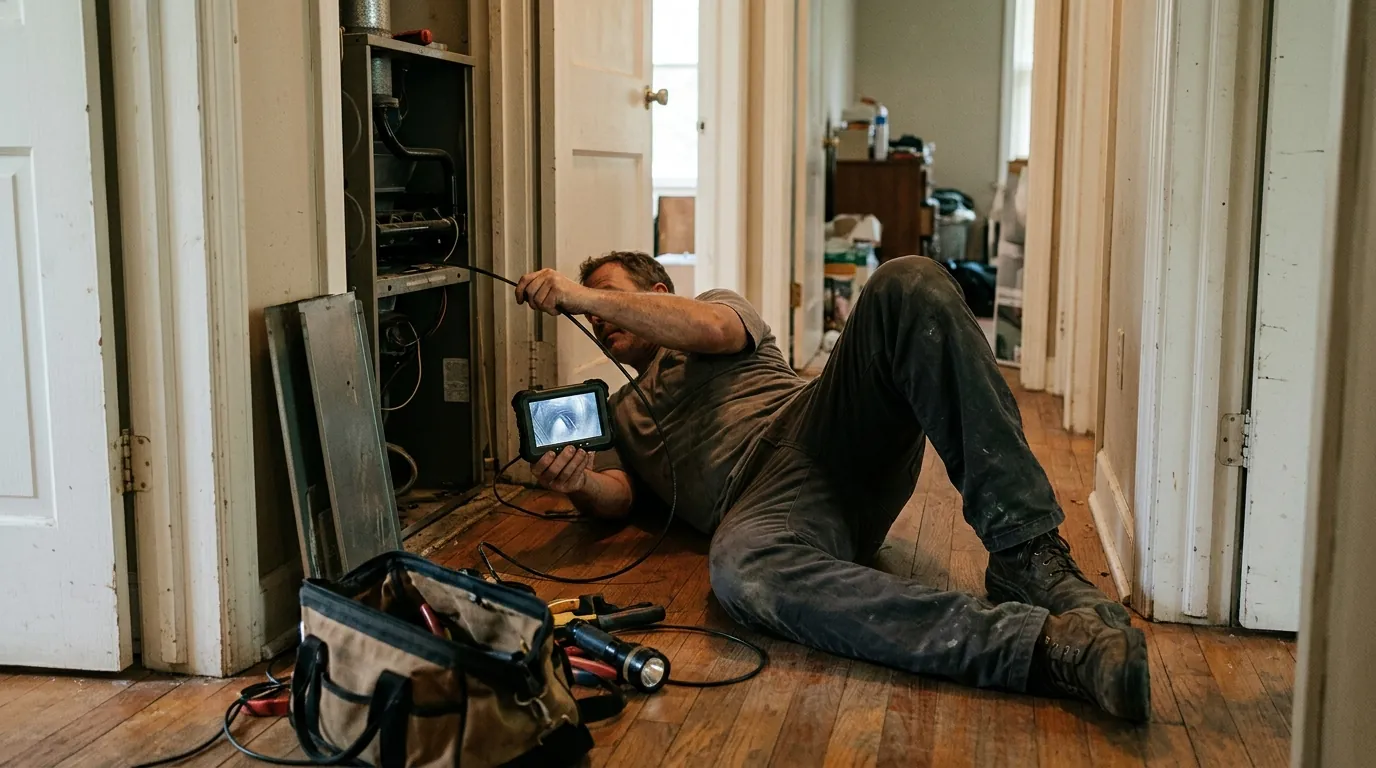
A heat exchanger and CO safety check looks for cracks, holes and heavy rust inside the furnace, tests the flame rollout and limit switches, measures carbon monoxide in the flue and the living space, and confirms the vent is clear. Zeltman Heating & Air shows you the camera footage and the readings, so you see the evidence behind any recommendation.
What a heat exchanger does and why it wears out
Inside every gas furnace, burners fire into a set of metal tubes or chambers called the heat exchanger. The blower pushes house air across the outside of that metal while the combustion gases stay inside and leave through the flue. As long as the metal stays intact, the two airstreams never mix.
Each heating cycle expands the metal as it warms and shrinks it as it cools. Over thousands of cycles, that movement can open hairline cracks, usually at bends, seams and crimped joints. Rust adds to the wear, and in Birmingham it often starts with summer humidity or a condensate leak from an AC coil sitting right above the furnace.
A crack does not automatically mean carbon monoxide is reaching your rooms. It does mean the barrier is compromised, and conditions can change from one cycle to the next. That is why we pair what we see with what we measure. We won't call a furnace dangerous on looks alone, or call it safe because a single reading came back low.
Most furnaces we check pass without drama, whether they are a Carrier, a Rheem or a Goodman. When one does not, you get the footage, the readings and a calm explanation of the choices. On a younger furnace, a replacement heat exchanger may still fall under the manufacturer parts warranty, while an older unit is usually better replaced as a whole.
What we inspect and measure on a CO safety check
- Camera inspection of the heat exchanger through the burner and blower openings
- Combustion test at the flue for carbon monoxide, oxygen and flue temperature
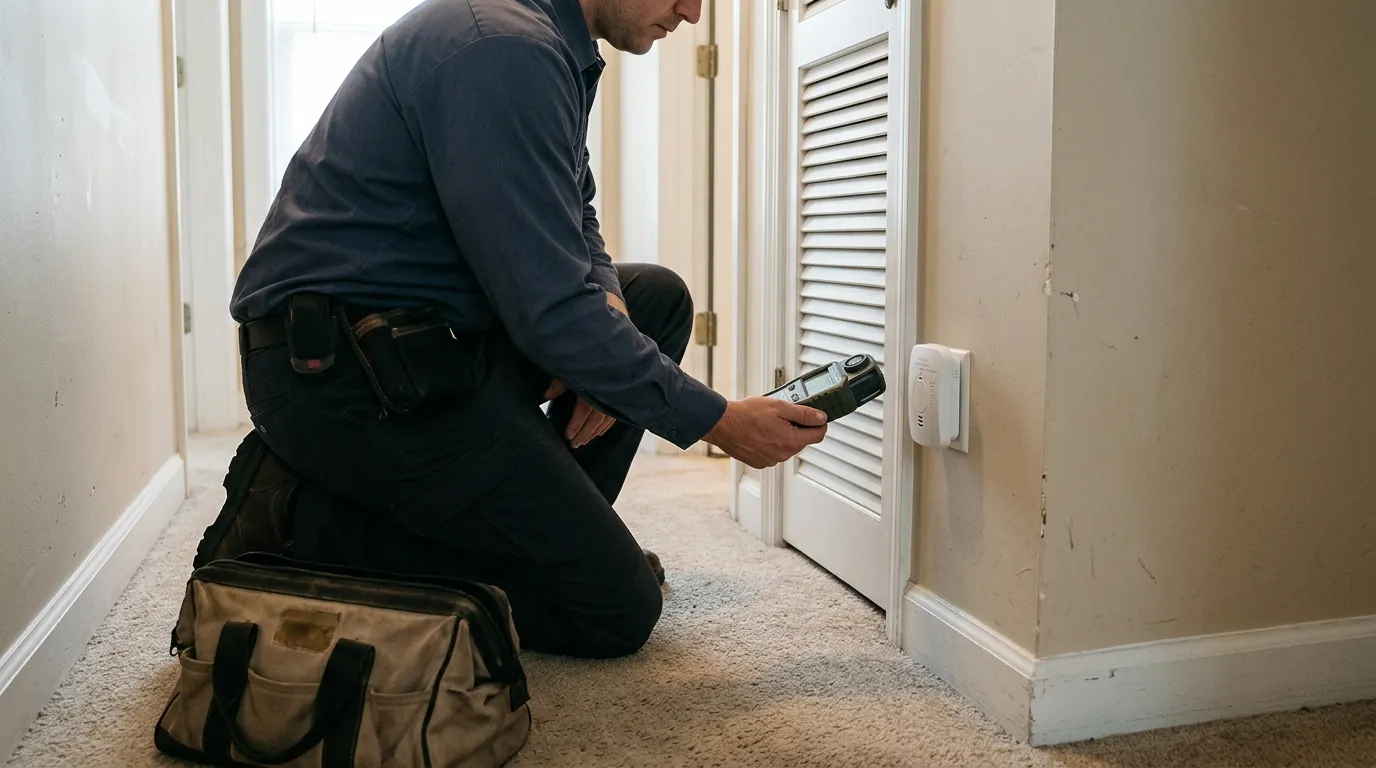
- Ambient CO readings near the furnace and in the main living areas
- Flame rollout switch and high limit switch operation
- Burner flame pattern before and after the blower starts
- Draft, flue pipe slope, joints and the vent termination
- Combustion air openings and clearances around the furnace
- Placement and test button check of your CO alarms
What a heat exchanger check catches before winter
Hairline cracks at bends and seams
Stress cracks tend to start where the metal folds or is crimped. The camera reaches spots a flashlight cannot, and we record what it shows so you can see it too.
Flame rollout
When flue gases cannot leave the normal way, flames can curl out of the burner area. A tripped rollout switch is a signal to find the cause, never a part to bypass.
Rust and scale from moisture
An AC coil dripping onto the furnace below, or a damp crawlspace, leaves rust flakes on the burners. Heavy scale can mean the metal is thinning.
Blocked or sagging vent pipes
Bird nests, a loose joint or a flue that slopes the wrong way can push exhaust back toward the furnace. We follow the vent all the way to its termination.
A flame that jumps when the blower starts
Burner flames that lift, waver or change color the moment the blower kicks on can mean house air is pushing through an opening in the metal.
CO readings that creep upward
Rising carbon monoxide in the flue gas often points to dirty burners, starved combustion air or weak draft. Caught early, that is usually a cleaning or an adjustment.
How a heat exchanger and CO check goes
A person schedules it
Call any hour. If a CO alarm is sounding right now, get everyone outside and call 911 or the gas company first, then we follow up on the furnace.
We read the air first
Before opening the furnace, the technician takes ambient CO readings in the home and beside the furnace, so nothing is missed at startup.
We look and we measure
The camera goes inside the heat exchanger, then a combustion analyzer reads the flue gases through a full heating cycle with the blower running.
You see the evidence
We show you the footage and the numbers on the spot, explain what each one means and give you the price of any repair before work starts.
We leave the furnace in a known state
A furnace that passes goes back into service. If we find a breach, we explain the risk plainly and, with your permission, shut off gas to the furnace until it is fixed.
What a heat exchanger inspection costs in Birmingham
$119 to $268
A single furnace in an easy hall closet sits near the low end. A second furnace, an attic unit or a check combined with full cleaning costs more. If we find a problem, the repair is priced separately and you see that number before anything is done.
Ask for a price (659) 777-4129What moves the number
- Number of furnaces
- Two-story homes in Hoover and Trussville often have two furnaces, and each one gets its own camera pass and combustion test.
- Where the furnace sits
- A horizontal furnace in a cramped attic takes longer to open up and film than an upflow unit in a closet.
- Furnace design
- Some cabinets give the camera easy access, while others need the blower or burner assembly pulled to see the critical areas.
- Pairing it with a tune-up
- Booking the safety check alongside a furnace tune-up shares the trip and the setup time between both jobs.
- Time of the call
- A check requested late at night after an alarm costs more than a planned weekday visit in the fall.
Heat exchanger and venting notes for Birmingham homes
In Forest Park, Glen Iris and other early 1900s neighborhoods, many furnaces vent into old masonry chimneys. Those chimneys were built for coal or wood, and some need a liner before a modern furnace can draft properly. In the brick ranches of Crestwood and Center Point, the furnace often sits in a hall closet behind a louvered door. We confirm it still gets enough combustion air.
Many homes in Hoover, Trussville and Pelham have the furnace in the attic with the AC coil stacked on top. When that drain clogs, water can drip onto the heat exchanger for months unnoticed. Our base on 15th Avenue North keeps Irondale, Woodlawn and East Lake close. Early fall is the calm time to book, before the first cold snap into the 20s.
Areas we cover most often
We repair and replace equipment from these manufacturers, plus most other makes.
Questions about heat exchanger and CO safety check in Birmingham
Once a year is a sensible rhythm, ideally in September or October before regular heating starts. Furnaces past 15 years, or ones with a history of rust, condensate leaks or rollout trips, deserve a careful look every fall without skipping a year.
Welding or patching a cracked heat exchanger is not an accepted fix. The heat exchanger itself can be replaced on many furnaces, sometimes under the manufacturer parts warranty, but the labor is significant. On an older furnace, replacing the whole unit usually makes more sense, and we show you both prices.
No. An inspection shows the condition of the furnace on the day we test it. A CO alarm watches around the clock for any source, including water heaters, gas ranges and attached garages. Homes with gas appliances should keep working alarms near sleeping areas whatever the inspection finds.
It means flames or heat escaped the burner area, which usually traces to a blocked flue, weak draft, a dirty burner or a heat exchanger problem. Resetting it again and again hides the cause. Leave the furnace off and call us so we can find out why it tripped.
Often, yes. A basic tune-up may only include a flashlight look. The camera reaches the upper passes and inner bends where cracks tend to start, and a combustion test across a full heating cycle shows how the furnace behaves under real operating conditions.
No. Electric furnaces and heat pumps burn no fuel, so there is no heat exchanger or flue gas to test. If your home has any gas appliance, a CO alarm still matters. On an electric system we check the heat strips, wiring and limit switches instead.
Related services and reading
- Furnace Tune-UpFall service covering burners, ignition, venting, gas pressure and safety switches.
- Furnace RepairNo heat, clicking with no flame, a tripped limit or a blower that runs nonstop.
- Emergency Heating RepairA cold-snap breakdown handled at any hour, with safety checks before restart.
- Furnace InstallationGas or electric furnaces sized, vented and set up for clean, quiet heat.
- What a fall furnace tune-up actually checksHeating guide
Need heat exchanger and CO safety check in Birmingham?
We answer 24/7. Tell us what the system is doing and we will tell you what happens next.