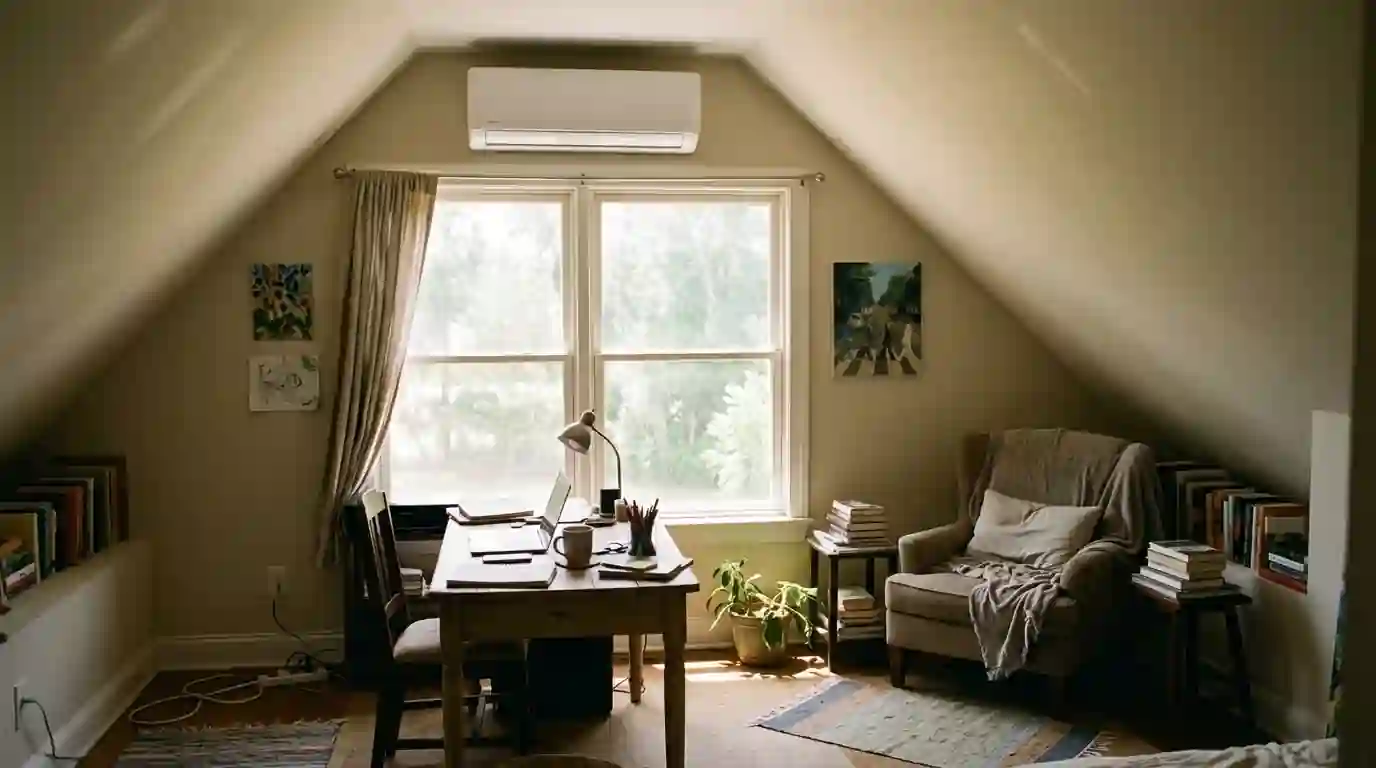
Where a mini-split makes more sense than extending ducts
A ductless mini-split is a small heat pump. An outdoor unit sits beside the house, and one or more indoor heads mount on a wall, ceiling or floor. Copper refrigerant lines, a drain line and a power cable run between them through a hole about three inches across.
Because no ductwork is involved, a mini-split shines in spaces the main system was never designed to reach. Around Birmingham, we install them most often in four situations.
- Bonus rooms over a garage, which bake in summer and run cold in January because they sit at the end of a long duct run.
- Sunrooms and enclosed porches, where glass walls create a heat load the main system cannot match.
- Garages and workshops that need comfort without sharing air with the house.
- Older homes with no duct space, where tall ceilings, plaster walls and shallow attics make ductwork difficult.
Extending the main system to these spaces often disappoints. Adding a supply run to a bonus room steals air from other rooms, and the thermostat in the downstairs hallway has no idea the bonus room is 84 degrees. A mini-split gives that space its own system and its own control.
Single-zone or multi-zone: which setup fits
A single-zone system pairs one outdoor unit with one indoor head. It is the simplest and most efficient choice for one room, such as a sunroom or a garage. Even a large room can often work with one head, as long as air can move freely through it.
A multi-zone system runs two to five indoor heads from one outdoor unit. Each head has its own remote and setting, so a bedroom can sleep cool while the living room stays warmer. Multi-zone makes sense for whole-house conversions in older homes and for a cluster of rooms on one floor.
The trade-offs to weigh
One outdoor unit for several heads saves space beside the house, but if that unit fails, every zone goes down at once. Multi-zone outdoor units also run less efficiently when only one small head is calling. For two rooms on opposite sides of a house, two single-zone systems are sometimes the better design.
Placing indoor heads and outdoor units
Head placement decides how comfortable a room feels. A high-wall head works well on an exterior wall where the air can throw across the room, not straight at a bed or a desk chair. In sunrooms with glass on three sides, a floor console often works better because it warms the cold floor area in winter and leaves the upper wall open.
Ceiling cassettes and slim ducted units hide the equipment for people who don't want a head on the wall. They need some attic or ceiling space, so they suit bonus rooms and additions more often than old plaster ceilings.
Outdoor units need firm footing, room to breathe and a spot where the line set route stays short. On sloped Birmingham lots, that often means a wall bracket or a raised pad on the high side of the house. We also keep units away from roof drip lines, dryer vents and corners where spring pollen piles up against a fence.
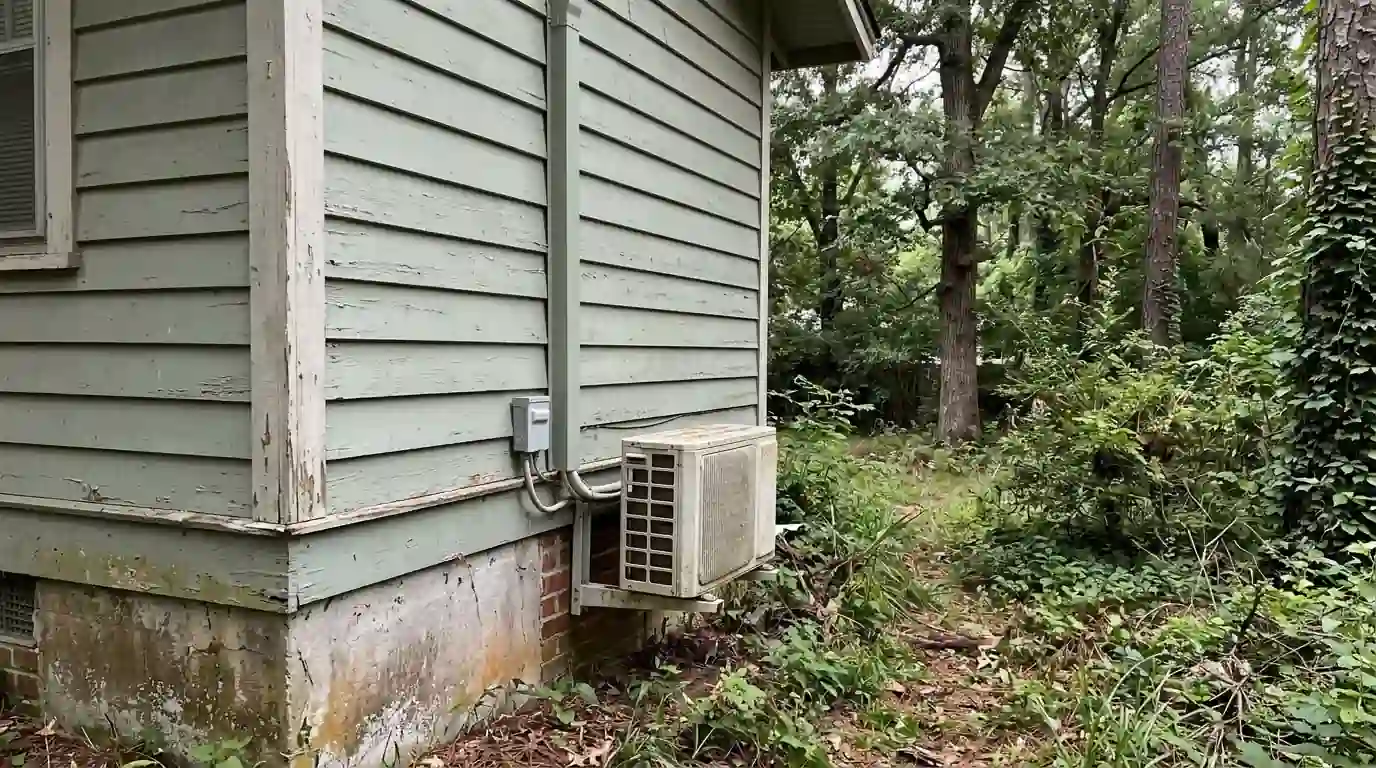
Mini-splits in Avondale, Forest Park and Highland Park bungalows
Many homes in Avondale, Forest Park and Highland Park date from the 1900s through the 1920s. They have tall ceilings, plaster walls, small or missing attics and crawlspaces that are tight at best. Plenty of them have relied on window units, or on one retrofitted system that never quite reached the back rooms.
A multi-zone mini-split lets these houses keep their plaster and trim. We plan line set routes through closets, along exterior walls under a painted cover, or up through the crawlspace, so very little shows. The outdoor unit usually goes at the side or rear of the house, out of sight from the street.
Heating matters in these homes as well. Older houses leak more air, and a January cold snap into the 20s or teens tests any heat pump. Many current mini-splits from Mitsubishi Electric, Daikin and Fujitsu are designed to keep heating at those temperatures, and we size each head with a room-by-room load calculation, not a guess.
What a mini-split costs in the Birmingham area
Prices vary with the number of zones, the type of indoor heads and how hard the line set route is. These are typical Birmingham-area installed ranges, not quotes.
- Single-zone, one high-wall head: about $3,480 to $5,970
- Two-zone system: about $6,840 to $10,960
- Three to four zones: about $9,870 to $16,430
- Ceiling cassette or ducted head: adds roughly $780 to $1,940 per head over a wall-mounted head
The biggest cost movers are line set length, wall material, electrical work and the drain route. A brick wall takes longer to core than siding, and a head on an interior wall may need a condensate pump. Some homes need a new circuit or more panel capacity, which we identify during the estimate so it is not a surprise later. New equipment comes with a manufacturer parts warranty, which we help you register.
Our ductless mini-split installation page explains how we plan zones, routes and equipment for these jobs.
Keeping a mini-split running well
Mini-splits need simple, regular care. The washable filters behind the front panel catch pollen and dust fast, especially in March and April. Rinse them every few weeks during heavy use, and let them dry fully before putting them back.
- Keep shrubs, leaves and pollen buildup a couple of feet away from the outdoor unit.
- Watch for water dripping from an indoor head, which often means a clogged drain line.
- Don't cover the head or block its airflow with curtains or tall furniture.
- Schedule a yearly cleaning of the indoor coil and blower wheel, which collect grime the filters miss.
Blinking lights, a dripping head or a unit that heats one day and not the next are signs it needs service. Leave the refrigerant lines and electrical connections alone, and call us for mini-split repair instead.
Key takeaways
- Mini-splits fit rooms the main ducts cannot reach: bonus rooms, sunrooms, garages and older bungalows.
- Single-zone is simplest for one room, while multi-zone suits whole-house conversions.
- Head placement and the line set route decide both comfort and cost.
- Rinse the washable filters often during spring pollen season.
Questions readers ask
Yes, when it is sized for the room. Sunrooms lose heat fast through glass, so we size from a load calculation and often use a floor console that warms the floor area. Many current mini-splits keep heating well below freezing, which covers the cold snaps we see here.
Very little. Each indoor head needs a hole about three inches across for the line set, and we route lines through closets, crawlspaces or along exterior walls under a cover. The head mounts on a bracket, and the original plaster and trim around it stay intact.
It can be, as long as the garage has some insulation and a reasonably tight door. A single-zone heat pump gives cooling in summer and heat in winter without tying the garage to the house ducts, which keeps fumes and dust out of the living space.
Most multi-zone outdoor units run two to five heads, depending on the model and its capacity. The combined size of the heads has to match what the outdoor unit can support, and for rooms far apart, two separate single-zone systems are sometimes the better layout.
Services mentioned in this guide
- Ductless Mini-Split InstallationDuctless comfort for bonus rooms, sunrooms, garages and older homes with no duct space.
- Mini-Split RepairBlinking error codes, dripping heads, weak airflow and units that cool one day and not the next.
- Heat Pump InstallationNew or replacement heat pumps matched to the house, the ductwork and Alabama winters.