Why drain lines clog so often in Birmingham
On a muggy summer day, a central air system can pull several gallons of water out of the house. That water drips off the indoor coil into a pan. Then it runs through a small PVC drain line to the outside or to a nearby plumbing drain.
The line is warm, dark and always wet, which is exactly what algae and bacterial slime like. Add dust and pollen that slip past the filter, and a slow buildup forms through the spring. By the first long heat wave, the line can be partly or fully blocked.
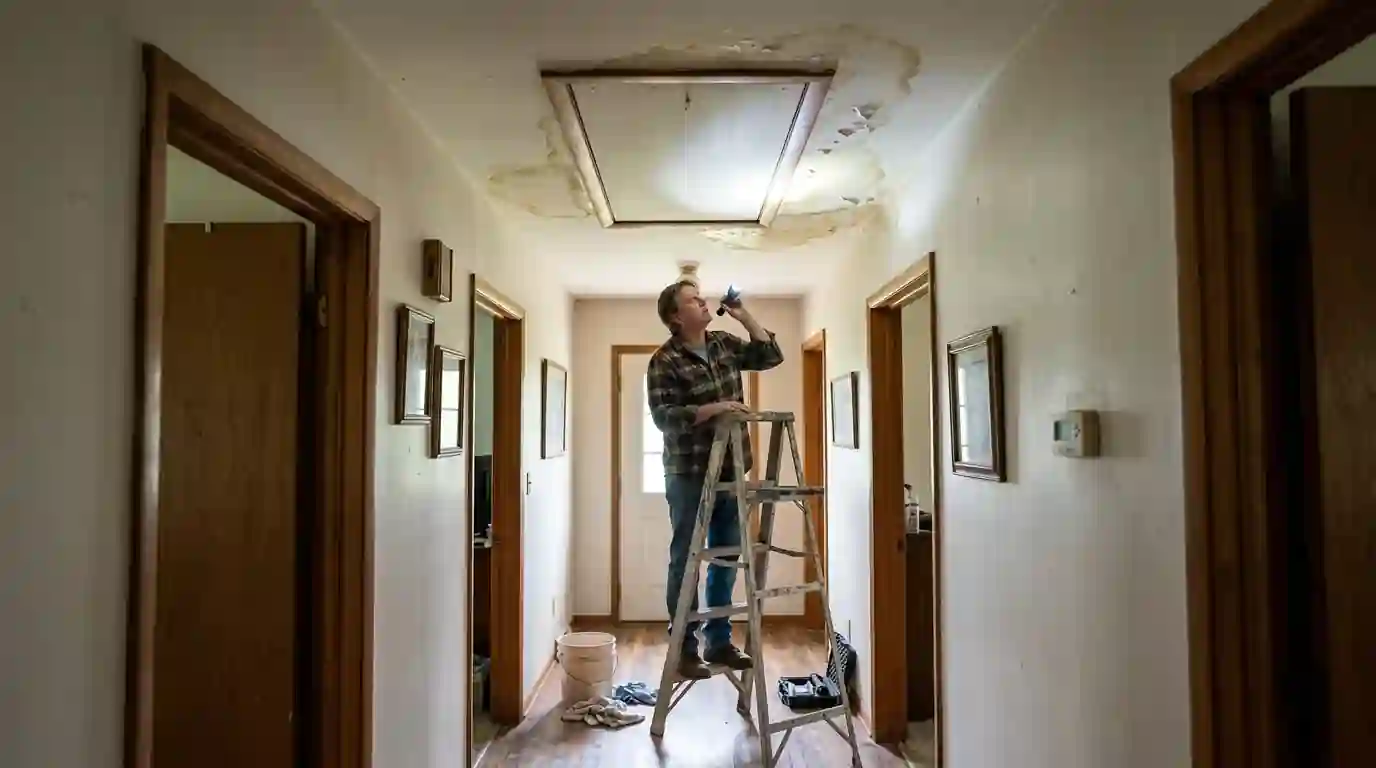
Attic air handlers make a clog more serious. Many Birmingham homes, including 1950s brick ranches and newer two-story homes, have the indoor unit sitting above a finished ceiling. When the drain backs up there, gravity brings the water down through the drywall.
Signs your condensate drain is clogged
- Standing water in the pan. The primary pan under the coil should drain as fast as it fills.
- The AC stops cooling but the indoor fan keeps running. A float switch may have tripped and shut off the outdoor unit.
- A blank thermostat. Some float switches cut power to the thermostat circuit instead.
- Water dripping from a pipe over a window or eave. Many attic systems have a secondary drain that ends somewhere you will notice. Water there means the main drain is blocked.
- Musty smells near the air handler or from the supply vents.
- Ceiling stains or damp spots around the furnace or air handler closet.
- Nothing coming out of the outdoor drain end on a hot afternoon while the system runs hard.
Any of these is worth checking within the week. A slow drip now becomes a stained ceiling later, and wet insulation in an attic can stay damp for a long time.
What the float switch is doing
A float switch is a small safety device with a float that rises as water rises. It sits in the secondary pan, in the primary pan or on the drain line itself. When water gets too high, the switch opens a low voltage circuit and shuts the system down before the pan overflows.
That shutdown means the switch is working. The temptation is to bypass it or dump the pan and restart, but the clog is still there. Clear the drain first. Once the water drains away, the float drops and the system usually restarts on its own.
If your attic unit has no float switch or secondary pan, that is worth fixing soon. A float switch is an inexpensive part compared with a ceiling repair.
How to flush the drain line with vinegar safely
This is the one drain task most homeowners can do. It needs no tools beyond a measuring cup, and you never open the equipment.
- Turn the system off at the thermostat. You do not need to touch the breaker or open any panels.
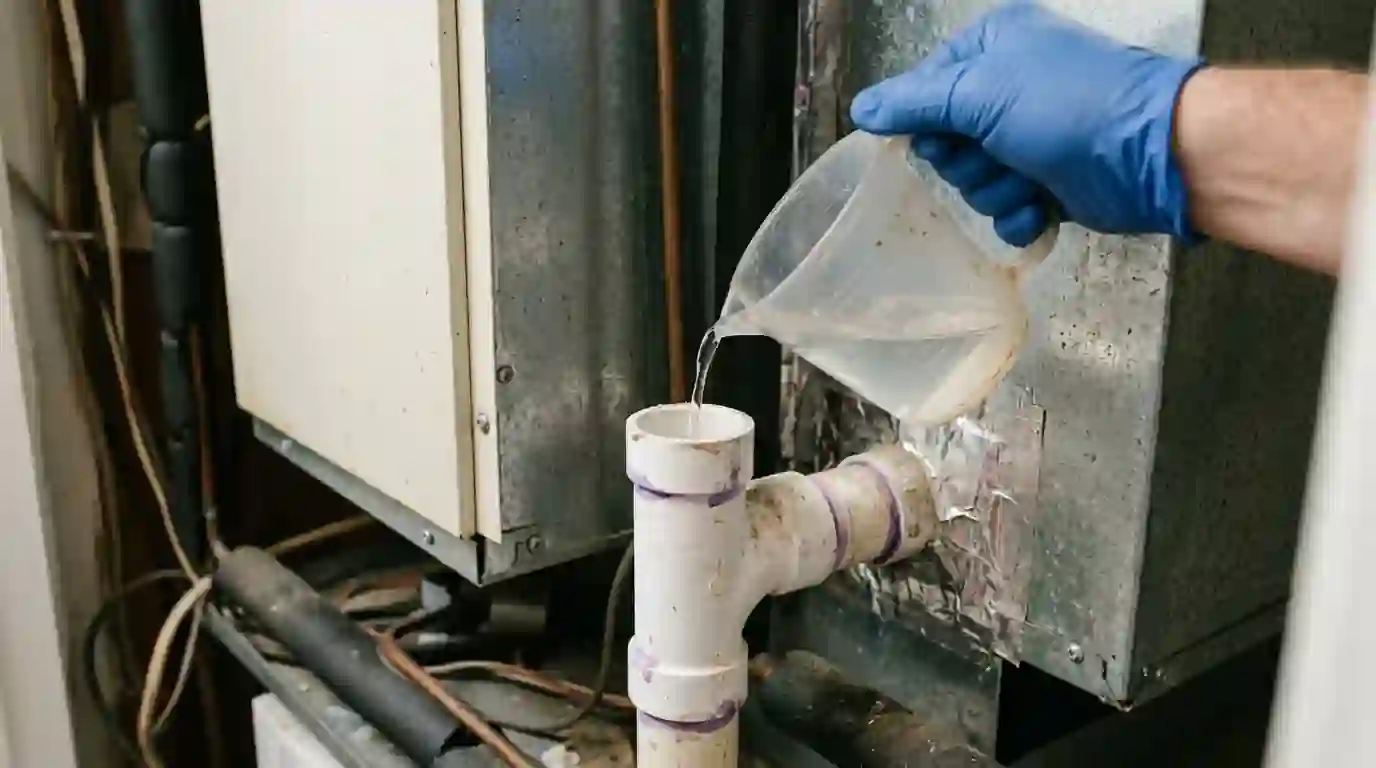
- Find the cleanout. Look for a short PVC tee with a removable cap on the drain line near the indoor unit.
- Pour in about a cup of distilled white vinegar. Pour slowly so it does not back up into the pan.
- Wait about 30 minutes. The vinegar loosens slime and algae inside the line.
- Follow with a few cups of clean water. Check the outdoor end, or the drain it empties into, and make sure water flows out.
- Replace the cap and turn the system back on.
Skip bleach and drain cleaners. Strong chemicals can damage pans, fittings and the coil, and mixing bleach with vinegar releases harmful fumes. Once a month during the cooling season, a vinegar flush helps keep algae from building back up.
If the outdoor end is easy to reach, a wet and dry shop vacuum held tight over the pipe for a minute can pull out a stubborn clog. Do not push wire or a coat hanger into the line from inside, because you can crack a fitting or loosen the connection at the pan.
Attic pans, secondary drains and condensate pumps
An attic air handler should sit in a secondary pan, sometimes called an emergency pan. It catches water if the primary drain or pan fails. Metal pans rust through with age, especially in attics that pass 130 degrees in August. A pan with rust holes or standing water needs attention.
Some systems in closets, basements or crawlspaces use a condensate pump instead of gravity. The pump has a small reservoir and its own float switch. A pump that hums, runs constantly or leaks around its base is close to failing.
Drain lines also need a proper slope toward the outlet and, on most systems, a trap near the unit. A line that sags in the attic holds water and clogs faster. We see this after attic work, when new insulation or storage boxes push the pipe out of position.
When to call instead of flushing
- Water has reached the ceiling, the floor or the secondary pan.
- The float switch trips again within a few days of a flush.
- Vinegar sits in the cleanout and will not drain.
- The pan is cracked or rusted through.
- There is ice on the coil or the refrigerant lines, which floods the pan as it melts and points to a separate problem.
- You smell mold or see growth on the pan or the air handler.
Our condensate drain repair visits clear the full line, test the float switch and check the trap, slope and pans. A spring AC tune-up includes a drain check, which is the easiest way to catch a slow clog before it reaches the drywall. If water is coming through the ceiling, a person answers our line 24/7.
Key takeaways
- Algae, dust and pollen clog AC drain lines most often in early summer.
- A tripped float switch is a warning, not the problem. Clear the drain before restarting.
- A cup of vinegar at the cleanout once a month in cooling season is a safe homeowner habit.
- Water in the secondary pan or on the ceiling means it is time to call for service.
Questions readers ask
About once a month from late spring through the end of the cooling season works well in Birmingham. Use about a cup of distilled white vinegar at the cleanout, wait 30 minutes and follow with clean water. If the line still clogs often, the slope, trap or pan may need repair.
A float switch most likely tripped. It senses rising water from a clogged drain and cuts the system off to prevent an overflow. Clearing the drain lets the float drop and the system restart, but if it trips again soon, the clog or the drain setup needs service.
We advise against it. Bleach can corrode metal pans and some fittings, and it reacts with vinegar or other cleaners to release harmful fumes. Distilled white vinegar at the cleanout is safer and does the job for routine algae control.
That pipe is usually the secondary drain from the emergency pan under an attic air handler. It is placed where you will see it, so water there means the main drain is blocked. Flush the main line or call for service before the pan overflows into the ceiling.